On Meaning, Motherhood, and Viktor Frankl’s Quiet Influence
What is the meaning of life? What is the purpose of this thing I’ve been given – a life – both in general terms, and for me personally?
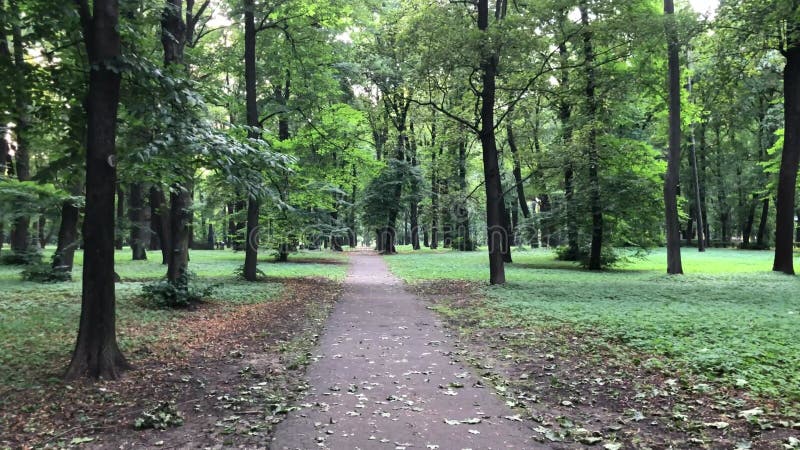
These questions played in my mind during my usual walk outside. They were stirred by reading passages from Viktor Frankl’s work in Man’s Search for Meaning and being introduced to Logotherapy. In truth, though, I’ve pondered these questions since I was a teen.
As I reflect on Frankl’s ideas, I’m also trying to integrate what I’ve learned from affective neuroscience, developmental psychology, and attachment literature. These fields offer decades of research pointing to a central truth: emotions – expressed through bodily sensations – exist to keep us alive and safe in the moment. And in childhood, that safety comes primarily from our attachment to caregivers. Humans evolved as relational beings – from the moment we’re born our survival depends on others. Throughout life, we continue to thrive or suffer based on the quality of our relationships. When those bonds are absent or persistently low-quality, people often languish in despair or stagnate at its edges, functioning as though biological survival is the only objective.
This brings me to the heart of relationships themselves. Their quality is experienced primarily through emotions. Are the overall interactions; cooperative, meaningful, and “good enough”? When they are, we feel emotional reward or satisfaction. When they aren’t – which is normal and inevitable – the error can either be brushed off without resentment or it can leave a trace of resentment or emotional imbalance, which is just the nervous system’s way of signaling that a rupture needs repair and that the relationship matters enough to preserve by tending to it.
Ruptures aren’t failures – they’re just moments that need repair. And repairs aren’t a big deal, they’re the everyday maintenance that restores emotional balance so interactions don’t become unbalanced or combative, with one person carrying more than their fair share of the emotional load. Over time, repeated repairs build high-quality relationships – what attachment researchers call secure attachment, or simply relationships that are at least “good enough”.
Normalizing conflict is essential to living in reality, which is often messy. No relationship escapes imperfection. Humans misattune to one another constantly. The real trouble begins not with ruptures themselves, but when too many ruptures go unrepaired for too long. That’s when relationships fall into the “ditch”. And what steers relationships into the ditch, again and again, are the very patterns that contribute to insecure attachment – low-quality relational dynamics where repairs aren’t attempted, aren’t effective, or aren’t sustained, and where emotional debts accumulate instead of get settled.
Unrepaired ruptures over time during childhood can leave deeper imprints. When emotional overwhelm cannot be processed because the relational caregiving environment is too restrictive, the residue can become trauma – a physiological imprint that outlives the moment and disrupts the ability to live in the present in an open, flexible and adaptive way.
Carrying many unrepaired ruptures means we arrive into adulthood with developmental gaps. At that point, it becomes our own responsibility – our own ability to respond – to fill them. But we can’t respond to what we can’t see or feel. Pain and suffering often reveal the gaps, especially when they repeat. Yet some people remain so defended from pain – through substances, denial, or refusal to reflect on how they impact others (including themselves) – that they never confront the pain. In doing so, they prolong their suffering and limit their capacity for meaningful and satisfying relationships. Some remain so cushioned from self-examination that they never grow into the deeper and more mature relational satisfaction available to them.
So again, the question returns: What is the purpose of life, beyond mere survival?
For me, the answer is my children. My purpose is to give them the best relationship with me as their mother – and with themselves and with each other (between the three of them) – that I can. These relationships shape the foundation that carries them into a world full of opportunity, hope, uncertainty, and injustice. Offering them a baseline of secure attachment helps prepare them for the parts of life I cannot control and keeps me focused on the parts where I do have agency.
I want to give my children the best of what I have, not in material terms but in relational ones and I’ve shared how I understand and measure that. That’s important, because children internalize the way they are perceived and treated; they often learn to treat themselves the way they experienced their parents treating them. When they reach adulthood, I don’t want them burdened with so many unrepaired ruptures and developmental gaps that they must repair and heal themselves before they can even see their potential.
And because of that, my own healing becomes part of my purpose. Filling in my developmental gaps allows me to show up more in meeting my potential as a mother. A mother who can offer a sturdy enough relational foundation between them and me, hopefully between themselves, and eventually expand to others. It’s a generational repair effort, and I’m committed to doing my part.
It is in this kind of giving that I receive a sense of deep satisfaction and meaning in life. That is the reward. Offering a solid relational foundation from which my children can build resilience and enjoy meaningful relationships beyond just me as their mom, and pursue their calling in life.
High-quality relationships are foundational to me – and cultivating them is a lifelong pursuit, one I hope will bless my children wherever they go in life.
Cultivating this clarity of meaning and purpose protects me from the noise of life. So many worthy priorities bid for my attention, but distilling my own life’s meaning in this way feels like using a compass – simple, steady, and profoundly clarifying for guiding the direction I move towards in life.
And perhaps someday, the world will feel the impact and be quietly better because of the way my children moved through it. And hopefully my children will feel a deep sense of meaning and satisfaction through the kind of giving they offer – the kind of giving from within, that is its own reward.