Empirical Spirituality: Two Things
I ventured outside “the church” about 10 years ago. Prior to that, I spent almost 20 years of adulthood in the church.

Leaving the fold started with the ending of my marriage. In retrospect, it could have been said that through my divorce, my ex-husband got the church, and I got the world and the freedom to explore who I was, what I believed, and more importantly how I wanted to live my life and why (not just because the Bible or Jesus says so). This forced me to develop critical thinking and self-reflective skills which emphasized emotional intelligence from the inside-out. This was akin to an overdue internal reset, while raising young children.
Deconstructing my spiritual worldview, which was embedded in fear, gradually ensued.
A persistent fear of an omnipotent evil force ruling the world and my private thoughts was slowly investigated, along with a subtle but persistent fear of abandonment by a more loving but less powerful and erratically intervening God as punishment or mere consequence for not conforming my thinking, believing, and behaving to a set-standard.
Keep in mind – this has been about a 10-year journey, not a rapid and haphazard endeavor. As far as I can tell, this will be a lifelong journey, with different seasons and excursions throughout.
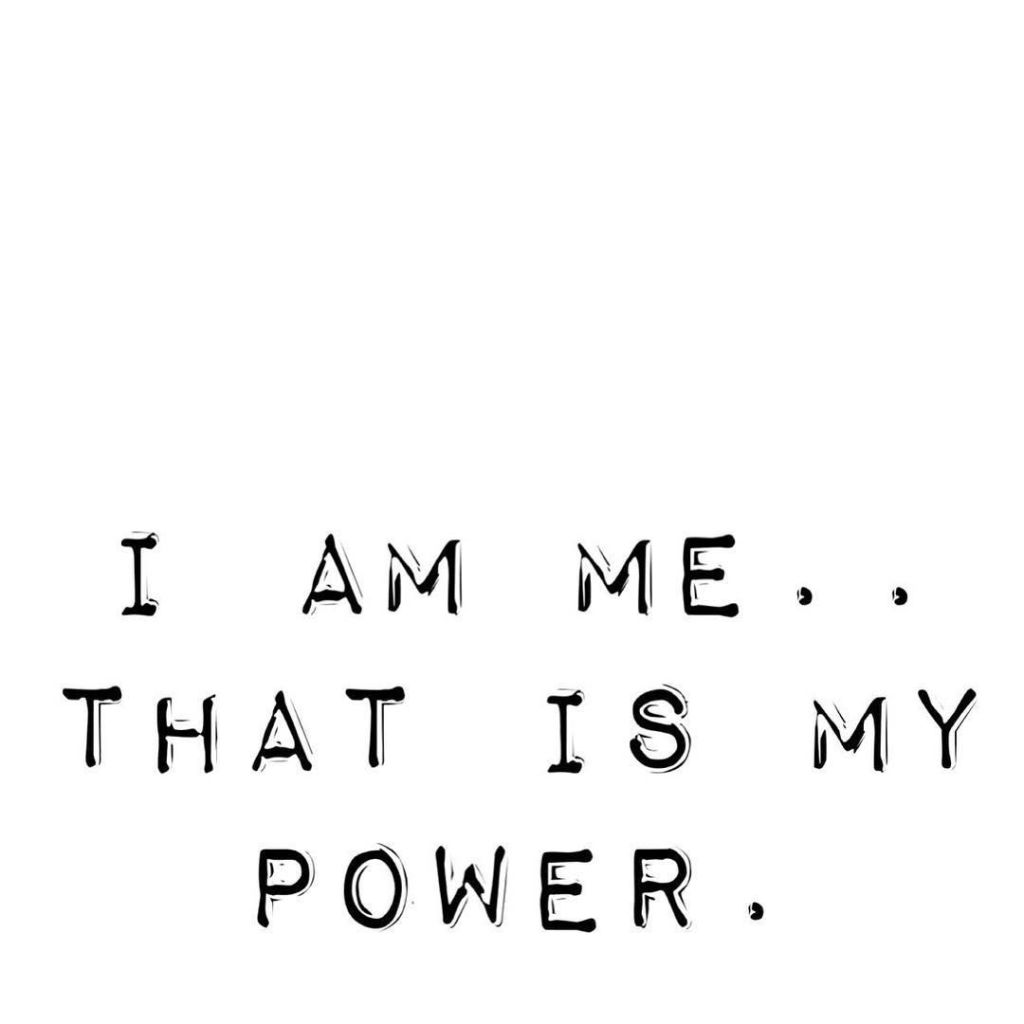
You see, the missing component in my spiritual worldview became apparent – a clear sense of what it meant to be me, according to me.
A slow and careful deconstruction involved my sense of self, which was also, guess what – feared as wholly untrustworthy. That belief had to be closely examined, with support of many trusted others.
The presumption that I was consensually conforming to this worldview from a place of being loved was something I could not grasp. It felt rigidly incoherent. I could not grasp this any longer, nor could I dismiss that I could not grasp it either. So, I tapped out.
Who was I? What did I believe in when it came to relating to the ineffable? How could I even embark on that when I couldn’t fully allow myself to express what was within, what I thought, felt, valued, and why? It all felt backwards. How could I relate to the transcendent when I didn’t know how to relate to the immanent? I often couldn’t clearly define what I felt, thought, and valued for myself. Why? Because I feared and/or disavowed all of that “fleshly” material for the transcendent. Again. Something felt amiss.
Looking back, the only thing I brought with me when I left the church was a curious, searching mindset out to answer something I couldn’t clearly articulate yet. What was I even searching for? I couldn’t have told you.
What I was searching for was a clearer sense of a self – both as a unique individual and as a non-unique human being. How could I truly love or be loved without a clearly sensed self, first? Love involves freely sharing something of the self.
Codependent (vacillating between being overly independent or overly dependent vs. interdependent), fear and shame-based conformity was all I knew. I conflated that with love and faith.
As I moved beyond the confines of the church, I took this one premise for deductive reasoning: God is love.
That’s it.
But what in the actual eff, is love? An apropos question following a divorce, don’t you think?
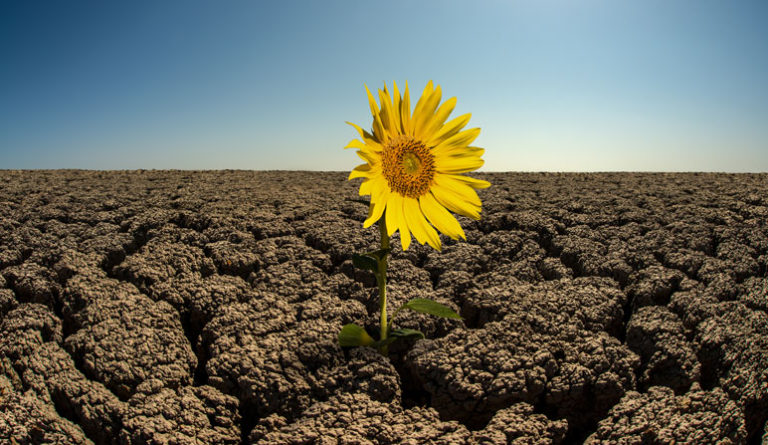
How do you define, characterize, and identify something that has felt so forsaken, foreign yet natural, innate yet elusive, for much of your life? Another premise was running in the back of my mind and that was this: Whatever I thought I knew about God and love was wrong. I need to start over. Burn the dead trees and see what comes up.
Reflecting on lived experiences, lots of therapy, lots of studying about attachment theory, different spiritual worldviews, along with some inductive reasoning formed by a developing reflective self or put simply: a self, an autonomous self, has helped point to something a lot less foggy.
I decided I needed to explore the world and myself, outside of the codependent relationship I had with religion, within the Evangelical Christian worldview.
As much as possible, I wanted to explore my own spirituality; empirically, autonomously, honestly, and authentically. When I say “spirituality”, I’m referring to how I relate to that which is immaterial and ineffable.
For the first time, I felt a newfound and yet terrifying sense of freedom to explore who I was outside of a belief system that defined my identity and values, the nature of reality, and God, for me. I was now able to discover and develop a more empirical spirituality and identity vs. a theoretical one, for myself.

It was like I was an eager student/scientist when it came to existential angst and humanistic questions that I was now free to ask, test, and not have to immediately settle with answers I had already been given.
This felt both liberating and terrifying. What if I got it all wrong? What if I can’t figure this out on my own? What if, what if, what if?
My divorce provided a sense of “evidence” that what I had believed, how I had perceived myself, God, reality, and life…was missing that foundational piece: A clearer sense of a me. Again – as a unique individual and as a non-unique human being.
Along with my own observations without the fear of hell and the devil overshadowing everything. This was truly the biggest test of faith or of trust in God I had ever taken: leaving the church. It felt like I was leaving “home”. Leaving “Kansas”.

Prayer (or self-talk) with open, honest, and emotionally raw relating did not cease. If anything, it increased. It reminds me of the Psalms of David. He had no “book of Psalms”. He didn’t know he was writing what would someday be used as a hymnal or considered sacred Scripture call “the Psalms”. He was just pouring out his naked heart and soul to God (or himself), uncensored.
This is what I did not leave behind when I left the church. God (which I also define as “Reality” or simply “what is”) cannot be boxed into a church, an idea, a belief, or a label. This is what I refer to as empirical spirituality. I used my ability to observe honestly; internally and externally.
Leaving the church actually helped me become more of an honest observer of life, of myself, and of the hardest age-old questions that still are unanswered. Like why is there so much unjust suffering in this world? A devil, spiritual warfare, and a loving and powerful God who is at war in unseen dimensions does not sufficiently answer that, even if it may be so. Nobody can conclusively prove or verify this, nor can anybody conclusively disconfirm and disprove it either, just like the existence of a Creator God or the non-existence of a Creator God. It is an unanswered question I’ve learned to live with, honestly. It will probably remain as such.
This is how living in faith feels to me; learning to be at peace with uncertainty.
I have read, listened to, worshipped with, visited, conversed with, and digested enough of a diverse plethora of perspectives on religion, theology, epistemology, religious and secular historicity, and psychology to say this:
At the end of the day, I don’t know what the actual facts are about so many things, in the least – what I’ve not borne witness to (like the resurrection or a man named Jesus). Yet, I can say this: only two things really matter.
But first, I have to say this from being such a devout “believer” prior to venturing outside of the church:
What specifically doesn’t matter most is what you (or I) say you (or I) believe in or don’t believe in, when it comes to religious faith, or spirituality, or epistemology.
You can label yourself a Christian, Atheist, Agnostic, Ex-Evangelical, Born-Again, Progressive, Spiritual-but-not-religious, Jew, New Ager, Hippie, Rationalist, Non-Dualist, Buddhist, or Muslim for all I care.
These labels mean very little.
What matters most is how you show up in life, especially in relationships. And this includes the relationship with your very own self, for that replicates in your relationships with others. For example, if you’ve got low tolerance for your own emotions, you’ll probably have a low tolerance for other people’s emotions.
So, what are the characteristics you embody while relating to others?
Simply put: How do you behave towards others?

How do you treat your family, partner, friends, exes, co-parents, ex-friends, co-workers, subordinates, bosses, neighbors, enemies, other people’s kids, people you’ve heard gossiped about, the have’s, the have-nots, acquaintances, people who are not like you, people you disagree with, or people you interact with online?
Of course, the way you relate to others varies immensely depending on context and many variables. There isn’t just one description, there’s complexity.
But in general, consider the people you interact with most – what characterizes how you show up? Or, do you avoid getting close to people?
How do you try to repair the inevitable mishaps in ongoing relationships?
How do you treat people who don’t interact with you regularly? Do you treat them better than those you interact with regularly? Or do you treat them a lot worse? WHY?
That is what matters most to me. It’s what I ask myself constantly.
How much do you care about how you treat people? Your label and beliefs mean very little compared to this.
Secondly: Are you growing?
How are you changing? One thing is constant and unchangeable in life: change itself. While change is inevitable, personal growth is not.
So, are you growing? And, how would you know? What is used to measure this change, merely your own opinion of yourself while you live a relatively isolated life? Ha! That’s a funny one! Especially if you have no record or documentation to track your inner life, your internal dialogue: your thought and emotional life. If you’ve not shared or expressed your inner life over a period of time to anyone, even yourself, i.e. a journal – how can you know any of this with confidence? Don’t fool yourself! Are you relying solely on memory? That is another thing that constantly changes. The story you tell yourself about the past. Your memory might be misleading you without you knowing it. Memory is very limited and bias, depending on mood and cognitive capacity, especially as you age in adulthood.

Don’t get me wrong, you’re definitely a major source of information, but you cannot be the only source with zero accountability or reference checks, so to speak. Who else would be able to answer this, in addition to yourself?
Consider thinking in terms of blocks of several months or years. How have your relationships changed? How has using your time and money changed? How has your perspectives changed?
Are you growing? And how do you know?
Is the only thing that is changing in life, the calendar and the ticking clock?
For me, to answer these questions with more clarity, I had to step outside of the church or a systematic worldview that I conformed to without a clear sense of self. I felt the pull to develop a spirituality that was more empirical. More authentic. More real and meaningful to me. This involved taking detailed notes, journaling in-depth, recording vulnerable discussions within myself/to God, and at times this involved sharing these with another trusted person.
I’ve found that for me, God represents a focus on reality and relationships, including the relationship with oneself, and fosters growth in how I connect with myself and others. In essence, God is reality: that which is or simply exists, empirically rather than theoretically.
The labels, beliefs, canonized books, and whatever interpretations come from ancient, canonized literature all matter little in comparison to those two things. At least, for me.

And one thing is perhaps the icing on the cake: Spiritual community. Authentic spiritual community. Where can I turn to for this? I think I can now turn back to the church. Perhaps, I am more ready to integrate community because I can find enough solidarity within any community as long as those two things have plenty of sunlight, soil, and water for there to be deep growth with others despite differences in mere labels.
Relationships and growth. They go hand in hand, together.
Let’s see what this will bring forth. I am looking forward to this next chapter and in contributing in a meaningful and authentic way. And community that can help foster those two things (which go hand in hand) is good enough for me!
At the end of the day, I will grow…come what may.




 mindingmybiz