The Question of Jesus: How an Executed Jewish Teacher Changed the World
A First-Century Jewish Teacher, a Roman Cross, and an Empire Transformed

The longer I study the history surrounding Jesus of Nazareth and the origins of Christianity, the more questions I seem to acquire rather than resolve. The historical record contains both points of broad scholarly agreement and areas of enduring debate. This post is not an attempt to settle those debates, nor to defend or dismiss any particular theological claim. Rather, it is a reflective exploration shaped by modern scholarship, intellectual honesty, and a sense of wonder at one of the most consequential and extraordinary stories in human history. While many questions remain unanswered, the story itself is, for me, too remarkable not to examine.
At the center of that story stands a man whose life, death, and legacy continue to provoke both devotion and debate more than two millennia later.
There is much mystery and uncertainty surrounding Jesus of Nazareth, a first-century Jew who lived under Roman occupation, was executed by the Roman state, and was proclaimed by his followers to have been raised from the dead. Modern scholarship broadly agrees that Jesus should first be understood within the world of Second Temple Judaism, the diverse Jewish religious landscape that existed between the rebuilding of the Jerusalem Temple after the Babylonian exile around 516 CE and its destruction by Rome in 70 CE. Jesus was a Torah-observant Jew who belonged to a covenant people who understood themselves to be called by the God of Israel and shaped by God’s promises, commandments, and hopes for redemption and restoration.
Most historians understand Jesus as a Jewish teacher, apocalyptic prophet, healer, and renewal movement leader whose mission was directed primarily toward Israel. His debates with other Jewish leaders were part of the normal religious discourse of his time rather than a rejection of Judaism itself. He appears to have proclaimed the nearness of God’s kingdom and called his fellow Jews to renewed covenant faithfulness. His execution by Rome suggests that he was perceived, rightly or wrongly, as a threat within the politically volatile environment of Roman-occupied Judea. Understanding Jesus, however, requires grappling not only with the man himself but also with the sources through which he has come down to us.
The earliest surviving Christian writings are not the Gospels but the undisputed letters of Paul. These seven letters, which most scholars agree were written by Paul himself, predate the Gospels and provide our earliest window into the beliefs of the Jesus movement. They were written in Greek approximately twenty to thirty years after Jesus’ death while the Jerusalem Temple was still standing. Jesus’ primary language was almost certainly Aramaic, though scholars continue to debate if or how much knowledge of Greek he had. The Gospels were written later, also in Greek, most likely after the destruction of the Temple in 70 CE, with Mark generally regarded as the earliest and John the latest.
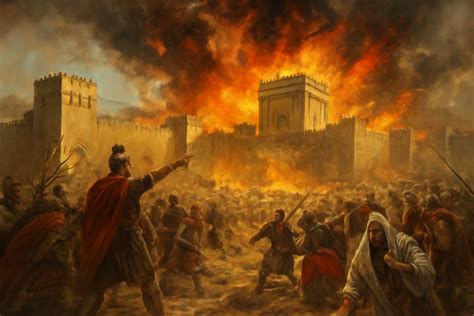
This means our earliest Christian documents come from a period when both Second Temple Judaism and the Jesus movement were still living realities. The Gospels, by contrast, reflect communities wrestling with the aftermath of one of the most consequential traumas in Jewish history: The destruction of the Second Temple by Roman forces in 70 CE and the end of the sacrificial system that had stood at the center of Jewish religious life for centuries.
While the Gospels remain indispensable historical sources, they are also theological interpretations of Jesus shaped by the concerns, memories, and convictions of their communities. John’s Gospel, in particular, differs significantly from the Synoptic Gospels (Matthew, Mark, and Luke), presenting a more developed theological portrait of Jesus and therefore occupying a distinctive place in discussions of the historical Jesus. These questions about the historical Jesus naturally lead to questions about how the earliest followers understood him and how those understandings developed over time.
Orthodox Christianity holds that the central doctrines later affirmed by the church were not new inventions, but clarifications of beliefs that had been present from the beginning. From this perspective, later church councils did not create these beliefs so much as define them more carefully in response to disagreement and debate.
Non-orthodox perspectives often argue that early Christianity was more diverse than later orthodoxy acknowledged. They suggest that beliefs about Jesus evolved through decades of theological reflection and were influenced by changing historical, cultural, and philosophical circumstances. From this perspective, what later became orthodoxy reflects one interpretation among several that gradually emerged as the dominant tradition. Questions about belief and doctrine inevitably lead to questions about power, influence, and history. For those who emphasize the diversity and development of early Christianity, the relationship between Christianity and the Roman Empire becomes especially important.
The role of imperial power becomes especially significant in the fourth century. Christianity began as a marginalized movement with no political influence. Its earliest adherents were a small collection of Jews and Gentiles scattered across the Roman Empire. Yet over the next three centuries the movement expanded throughout the Mediterranean world. Historians point to a variety of factors that contributed to this growth: Paul’s successful mission to Gentiles, the ease with which ideas and people could travel throughout the interconnected Roman Empire, the appeal of early Jesus-following communities that welcomed people from many different ethnic, economic, and social divisions, their reputation for mutual care, and a message that offered meaning, hope, and belonging in a changing world.
The transformation became especially dramatic when the Roman emperor Constantine legalized Christianity and began supporting the church in the early fourth century. Christian bishops gained influence, churches received imperial backing, and theological disputes increasingly became matters of political importance. Under the Roman emperor Theodosius I, Christianity as defined by the Nicene Creed eventually became the empire’s official religion, completing a dramatic transformation from state-persecuted movement to state-supported faith. People draw different conclusions from this period of history. Many Christians see it as a time when longstanding beliefs were more clearly defined. Others contend that the growing power of the church and the Roman Empire influenced which beliefs became accepted as orthodox and which did not.
Yet, both perspectives must reckon with an undeniable historical reality: long before Christianity possessed armies, emperors, councils, bank accounts, or state power, Jewish followers of Jesus were already proclaiming that he had been raised from the dead, exalted by God, and given extraordinary significance within God’s purposes for Israel and the world. Whatever later developments occurred, these convictions did not originate in imperial courts or church councils. The movement’s most explosive growth began centuries before it gained political power, and many of its central convictions are attested in sources that predate Constantine by hundreds of years.
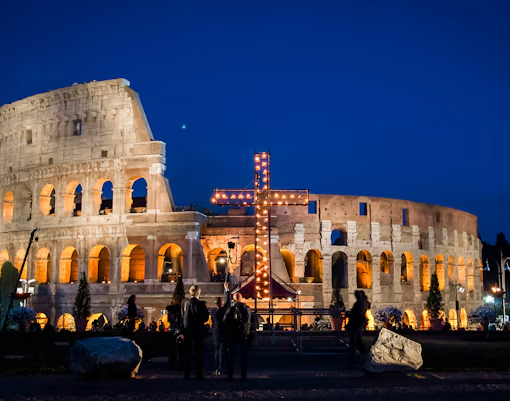
These historical realities leave us with one of the most fascinating questions in the study of Christian origins.
Jesus was executed by the Roman state as a perceived threat to public order. Within a few centuries, the empire had reorganized itself around the man it condemned, and the cross had become a defining symbol of solidarity, despite having once been the instrument of his execution.
Whatever one’s conclusions about theology, faith, miracles, or the resurrection, this remains one of the most remarkable reversals in human history.
And yet the historical puzzle remains:
What was it about this Jewish man – his life, his teachings, his death, and the claims made about him after his death – that proved so compelling that the movement centered on him survived his execution, outlasted the empire that condemned him, and ultimately helped transform the world?
I sometimes wonder whether part of the answer lies in the possibility that God is, for lack of a better phrase, beautifully weird. Holy. Different. Not operating according to our assumptions about power, success, influence, or importance. If so, there may be something profoundly compelling about a story in which an obscure Jewish teacher, executed by the dominant world power of his day, becomes the center of a movement that outlasts the empire that condemned it and continues to shape the world we all share.