mindingmybiz

This blog is my shared process in working towards integrating self-awareness with all other aspects of life, while on my way to becoming more authentic and whole.

Archive for the tag “shame”

On Emotions

Emotions are part and parcel of being alive and human. They exist for the purpose of survival and flourishing.

Emotions are forces of energy which propel us to take particular actions that are supportive, protective, transformative, and creative.

Yet, just like other forces of nature or energy like heat – their power can range from being productive to destructive.

One of the first things to understand about emotions is that most of our understanding about emotions is flawed. More specifically – misguided, unhelpful, and even harmful.

Emotional literacy is not taught in our schools, nor is it valued. This leaves us far more ignorantly vulnerable and unprotected to the pathological, maladaptive, and misuse of emotions which are incredible sources of energy, power, healing, and innate wisdom.

Instead, we judge ourselves and others for having emotions even though they are a natural part of human evolution. We apply a lens that is restrictive and limiting to our emotions that is dualistic: “right or wrong”, “good or bad”. This makes it a lot harder to do what is evolutionarily intended: to feel them, and if they are intense – to feel and acknowledge them in the presence of supportive and understanding others.

So then – How do things go so awry when it comes to emotions?

Let’s start from the beginning, when humans start to develop. Infancy.

In order for infants to develop optimally – they naturally need and depend on an emotional bond with at least one caregiver that is characterized by a felt experience of: Belonging, reliability, comfort, being delightfully interested in, nurturing, and protection.

This kind of relationship in turn facilitates, understands, and values the preverbal communication of the infant – which is through expression of a range of different emotions.

The infant expresses feelings and needs: physical, social, and psychological. This forms the foundation for the child to develop their sense of who they are (self), in and through their relational experience of feeling enoughness: safe enough, good enough, on a consistently enough basis.

The necessary enoughness involves relational repairs when the inevitable human misattunements occur, which rupture the secure emotional bond from being experienced.

Relational repairs in childhood actually increases the tolerance level for inevitable misattunements and minor emotional injuries by loved ones. This is in a similar fashion to how the immune system develops – through micro exposures to a variety of foreign organisms it’s forced to adapt to, but I digress…

This kind of relational experience with at least one significant caregiver becomes internalized and cultivates how the child comes to see themself, even in a not yet consciously aware way.

This relationally developmental process profoundly influences the initial way the child sees themself and others in the years to come.

So, for better or worse: Young and vulnerable humans (infants) internalize how they are treated, responded to, and reflected back, by caregivers.

How are the inevitable mishaps, misattunements, and miscoordinated interactions by loving but imperfect caregivers handled?

It depends a lot on how the caregiver responds to feeling vulnerable and exposed as imperfect. This is where the difficult but important emotion of shame comes in. How do they respond to feedback that communicates: You’re missing me. You’re not getting it right with me – and it’s important to get it right – which activates some shame go alert for a course correct.

Will the caregiver rigidly defend against feeling shame and vulnerability to making mistakes? Or will they be open to owning that natural although uncomfortable part of being human and learn because shame is a marker that something important is occurring in this moment.

Can they respond to the invitation to reflectively course-correct with compassionate curiosity? This is the gift of within-tolerance-level shame. It alerts us to the inevitable need to course-correct when engaging in something that is important to us, like our relationships.

Course-corrections are a universal aspect of what it means to be human.

Humans are mistake-and-error-makers.

And –

Human are an incredibly teachable species, or we would not have been able to adapt and survive.

This learning or adaptiveness takes place when we are not so hardened to shame.

Self-compassion is an essential protector from intolerable shame which often in turn leads to being defended against or hardened to shame. That just robs us of the opportunity to make adaptive changes and course corrections on this journey called life.


That is my evolving introductory reflections from reading about attachment, affective neuroscience, developmental trauma, and on accelerated experiential dynamic psychotherapy (AEDP) which is a healing oriented approach to therapy.

In deep gratitude I continue to learn and have been profoundly influenced by studying the work of:

  • Diana Fosha
  • Hilary Jacobs Hendle
  • Peter Fonagy
  • Kristin Neff
  • Steven Hayes
  • Daniel Siegel
  • Ed Tronick

Self-Love Accountability Act

I’m holding myself accountable for, loving myself well. And to love myself well, is to know myself well, not just the parts I’m comfortable with.

This Self-Love Accountability Act will set you free, but more importantly – set me free.

With freedom, comes responsibility. With responsibility, comes freedom.

To the degree of freedom I seek, is the degree of responsibility I take. Outrageous and abnormal freedom requires outrageous and abnormal responsibility.

When it comes to our important relationships (romantic, parenting, relatives, workplace, friendships, etc.) I crave different levels of intimacy, but abhor all levels of vulnerability.

In my observations of being a human and walking with other humans thus far, I’ve noticed that we demand our personal freedoms, yet demand personal indemnity from our choices coming from our personal freedoms. This is not a political statement, but a personal one. We can be very shrewd and sophisticated in our ability to fight for our right to be unaccountable for ourselves within our most important (and vulnerable-laden) relationships. We hold others on the hook, while holding ourselves in tandem. It’s the double-bind of personal power within relationships. There’s this subconscious and tacit rule that can lead to so much avoidable stress within relationships when we energetically or emotionally communicate: “I want YOU to do what I don’t do, but better!'”

Personally, I’m becoming ‘woke’ to the ego-offending truth that I’ve lived for far too long relying on this double-bind to actually work for me, and those I care about. All while mostly holding them accountable while I defend my right to be free. This expansion is empowering me towards working WITH this paradox of personal power, which has both abundant freedom AND responsibility, in tandem.

For example, I’ve often expected others to generously and enthusiastically give me, what I’ve unwittingly been stingy and discriminately willing to give to myself – unconditional acceptance in the areas I feel the most vulnerable in. My vulnerabilities are parts or particulars deep down within, which I judge as least worthy of being seen in their unadulterated and unfiltered lens with dignity, let alone – love. Some call this shame.

The way to release the shame, is to look into my most shamed aspects of myself closely and in the light of conscious awakeness and see these sorely misunderstood and judged parts in the ways I want others to see me – with deep and sincere compassion, yet a no bullshit kind of honesty. These are not mutually exclusive. It’s living in the holding space of the human experience somewhere between “right” and “wrong”. Coming from a budding place of conscious acceptance vs self-ignorance.

It is MY job to know myself better, and love all parts. It is not other people’s job to do this for me. It is MY job to cultivate happiness, meaning, and growth in whatever circumstances I’m in, not others. And oddly, the more I do this for myself, the more I’ll find that this is being mirrored back by others who do this as well, almost effortlessly, but vice versa. Mirrors don’t judge, they just reflect.

This doesn’t mean I shouldn’t ever reach out for support, or receive support that’s available if I should choose to reach for it. Withholding that kind of support for myself isn’t very responsible or self-loving, and just frankly doesn’t get me very far, very fast. If it does for you, then keep at it!

I will receive support to nurture myself, especially when this is something new and outside of my comfort zone. Just as someone who is learning a foreign language would be wise to put themselves in environments where this new language is well spoken. Where they can practice the language while receiving helpful feedback and encouragement, while on their path to learning something new.

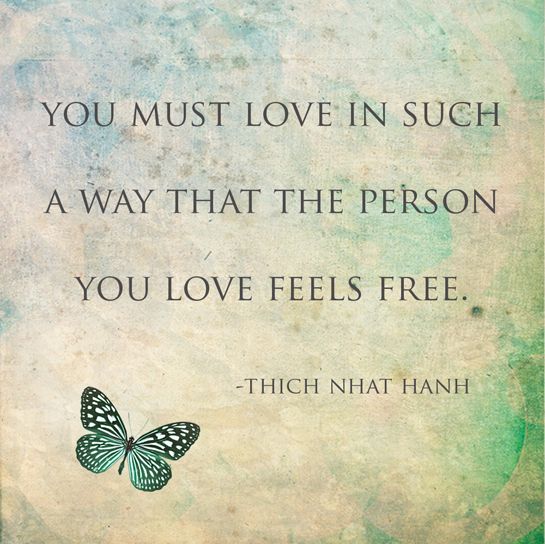
Set yourself free by holding yourself accountable to giving and receiving with yourself, the kind of love you want to receive, generously and abundantly. By doing this, you’ll also be setting those around you free to freely love and accept you, without the burden of the subconscious quid pro quo of “give-and-take” when it comes to taking turns babysitting each other’s egos. You cannot give love, in order to feel entitled for having resentment for not receiving love that you do not give and receive consciously with yourself first. Correction: You CAN do that! Just ask yourself honestly – how’s that been working for you? Do you and the other both come out ahead? This is a direct message coming from one who has done this in spades, and comes from a place of self-love and belief in your power to do this, imperfectly but progressively.

I’ve lived long enough in my life to learn this lesson, that getting caught up in the trap of “giving-to-get” gets old and never seems “fair” or “equitable” for long. The tallies just don’t seem to ever add up on each other’s scoresheet.

How am I giving and receiving within myself, what I want to receive from others in my most important relationships? Before I ask myself if others are measuring up (albeit is a valid and necessary question) – I will ask myself if I am first? Practicing outrageous accountability in this, will lead me to outrageous freedom I’m so ready to receive, and thank myself for and attracting this kind of empowering love into my life.

Post Navigation