mindingmybiz

This blog is my shared process in working towards integrating self-awareness with all other aspects of life, while on my way to becoming more authentic and whole.

Archive for the tag “spirituality”

Empirical Spirituality: Two Things

I ventured outside “the church” about 10 years ago. Prior to that, I spent almost 20 years of adulthood in the church.

Leaving the fold started with the ending of my marriage. In retrospect, it could have been said that through my divorce, my ex-husband got the church, and I got the world and the freedom to explore who I was, what I believed, and more importantly how I wanted to live my life and why (not just because the Bible or Jesus says so). This forced me to develop critical thinking and self-reflective skills which emphasized emotional intelligence from the inside-out. This was akin to an overdue internal reset, while raising young children.

Deconstructing my spiritual worldview, which was embedded in fear, gradually ensued.

A persistent fear of an omnipotent evil force ruling the world and my private thoughts was slowly investigated, along with a subtle but persistent fear of abandonment by a more loving but less powerful and erratically intervening God as punishment or mere consequence for not conforming my thinking, believing, and behaving to a set-standard.

Keep in mind – this has been about a 10-year journey, not a rapid and haphazard endeavor. As far as I can tell, this will be a lifelong journey, with different seasons and excursions throughout.

You see, the missing component in my spiritual worldview became apparent – a clear sense of what it meant to be me, according to me.

A slow and careful deconstruction involved my sense of self, which was also, guess what – feared as wholly untrustworthy. That belief had to be closely examined, with support of many trusted others.

The presumption that I was consensually conforming to this worldview from a place of being loved was something I could not grasp. It felt rigidly incoherent. I could not grasp this any longer, nor could I dismiss that I could not grasp it either. So, I tapped out.

Who was I? What did I believe in when it came to relating to the ineffable? How could I even embark on that when I couldn’t fully allow myself to express what was within, what I thought, felt, valued, and why? It all felt backwards. How could I relate to the transcendent when I didn’t know how to relate to the immanent? I often couldn’t clearly define what I felt, thought, and valued for myself. Why? Because I feared and/or disavowed all of that “fleshly” material for the transcendent. Again. Something felt amiss.

Looking back, the only thing I brought with me when I left the church was a curious, searching mindset out to answer something I couldn’t clearly articulate yet. What was I even searching for? I couldn’t have told you.

What I was searching for was a clearer sense of a self – both as a unique individual and as a non-unique human being. How could I truly love or be loved without a clearly sensed self, first? Love involves freely sharing something of the self.

Codependent (vacillating between being overly independent or overly dependent vs. interdependent), fear and shame-based conformity was all I knew. I conflated that with love and faith.

As I moved beyond the confines of the church, I took this one premise for deductive reasoning: God is love.

That’s it.

But what in the actual eff, is love? An apropos question following a divorce, don’t you think?

How do you define, characterize, and identify something that has felt so forsaken, foreign yet natural, innate yet elusive, for much of your life? Another premise was running in the back of my mind and that was this: Whatever I thought I knew about God and love was wrong. I need to start over. Burn the dead trees and see what comes up.

Reflecting on lived experiences, lots of therapy, lots of studying about attachment theory, different spiritual worldviews, along with some inductive reasoning formed by a developing reflective self or put simply: a self, an autonomous self, has helped point to something a lot less foggy.

I decided I needed to explore the world and myself, outside of the codependent relationship I had with religion, within the Evangelical Christian worldview.

As much as possible, I wanted to explore my own spirituality; empirically, autonomously, honestly, and authentically. When I say “spirituality”, I’m referring to how I relate to that which is immaterial and ineffable.

For the first time, I felt a newfound and yet terrifying sense of freedom to explore who I was outside of a belief system that defined my identity and values, the nature of reality, and God, for me. I was now able to discover and develop a more empirical spirituality and identity vs. a theoretical one, for myself.

It was like I was an eager student/scientist when it came to existential angst and humanistic questions that I was now free to ask, test, and not have to immediately settle with answers I had already been given.

This felt both liberating and terrifying. What if I got it all wrong? What if I can’t figure this out on my own? What if, what if, what if?

My divorce provided a sense of “evidence” that what I had believed, how I had perceived myself, God, reality, and life…was missing that foundational piece: A clearer sense of a me. Again – as a unique individual and as a non-unique human being.

Along with my own observations without the fear of hell and the devil overshadowing everything. This was truly the biggest test of faith or of trust in God I had ever taken: leaving the church. It felt like I was leaving “home”. Leaving “Kansas”.

Prayer (or self-talk) with open, honest, and emotionally raw relating did not cease. If anything, it increased. It reminds me of the Psalms of David. He had no “book of Psalms”. He didn’t know he was writing what would someday be used as a hymnal or considered sacred Scripture call “the Psalms”. He was just pouring out his naked heart and soul to God (or himself), uncensored.

This is what I did not leave behind when I left the church. God (which I also define as “Reality” or simply “what is”) cannot be boxed into a church, an idea, a belief, or a label. This is what I refer to as empirical spirituality. I used my ability to observe honestly; internally and externally.

Leaving the church actually helped me become more of an honest observer of life, of myself, and of the hardest age-old questions that still are unanswered. Like why is there so much unjust suffering in this world? A devil, spiritual warfare, and a loving and powerful God who is at war in unseen dimensions does not sufficiently answer that, even if it may be so. Nobody can conclusively prove or verify this, nor can anybody conclusively disconfirm and disprove it either, just like the existence of a Creator God or the non-existence of a Creator God. It is an unanswered question I’ve learned to live with, honestly. It will probably remain as such.

This is how living in faith feels to me; learning to be at peace with uncertainty.

I have read, listened to, worshipped with, visited, conversed with, and digested enough of a diverse plethora of perspectives on religion, theology, epistemology, religious and secular historicity, and psychology to say this:

At the end of the day, I don’t know what the actual facts are about so many things, in the least – what I’ve not borne witness to (like the resurrection or a man named Jesus). Yet, I can say this: only two things really matter.

But first, I have to say this from being such a devout “believer” prior to venturing outside of the church:

What specifically doesn’t matter most is what you (or I) say you (or I) believe in or don’t believe in, when it comes to religious faith, or spirituality, or epistemology.

You can label yourself a Christian, Atheist, Agnostic, Ex-Evangelical, Born-Again, Progressive, Spiritual-but-not-religious, Jew, New Ager, Hippie, Rationalist, Non-Dualist, Buddhist, or Muslim for all I care.

These labels mean very little.

What matters most is how you show up in life, especially in relationships. And this includes the relationship with your very own self, for that replicates in your relationships with others. For example, if you’ve got low tolerance for your own emotions, you’ll probably have a low tolerance for other people’s emotions.

So, what are the characteristics you embody while relating to others?

Simply put: How do you behave towards others?

How do you treat your family, partner, friends, exes, co-parents, ex-friends, co-workers, subordinates, bosses, neighbors, enemies, other people’s kids, people you’ve heard gossiped about, the have’s, the have-nots, acquaintances, people who are not like you, people you disagree with, or people you interact with online?

Of course, the way you relate to others varies immensely depending on context and many variables. There isn’t just one description, there’s complexity.

But in general, consider the people you interact with most – what characterizes how you show up? Or, do you avoid getting close to people?

How do you try to repair the inevitable mishaps in ongoing relationships?

How do you treat people who don’t interact with you regularly? Do you treat them better than those you interact with regularly? Or do you treat them a lot worse? WHY?

That is what matters most to me. It’s what I ask myself constantly.

How much do you care about how you treat people? Your label and beliefs mean very little compared to this.

Secondly: Are you growing?

How are you changing? One thing is constant and unchangeable in life: change itself. While change is inevitable, personal growth is not.

So, are you growing? And, how would you know? What is used to measure this change, merely your own opinion of yourself while you live a relatively isolated life? Ha! That’s a funny one! Especially if you have no record or documentation to track your inner life, your internal dialogue: your thought and emotional life. If you’ve not shared or expressed your inner life over a period of time to anyone, even yourself, i.e. a journal – how can you know any of this with confidence? Don’t fool yourself! Are you relying solely on memory? That is another thing that constantly changes. The story you tell yourself about the past. Your memory might be misleading you without you knowing it. Memory is very limited and bias, depending on mood and cognitive capacity, especially as you age in adulthood.

Don’t get me wrong, you’re definitely a major source of information, but you cannot be the only source with zero accountability or reference checks, so to speak. Who else would be able to answer this, in addition to yourself?

Consider thinking in terms of blocks of several months or years. How have your relationships changed? How has using your time and money changed? How has your perspectives changed?

Are you growing? And how do you know?

Is the only thing that is changing in life, the calendar and the ticking clock?

For me, to answer these questions with more clarity, I had to step outside of the church or a systematic worldview that I conformed to without a clear sense of self. I felt the pull to develop a spirituality that was more empirical. More authentic. More real and meaningful to me. This involved taking detailed notes, journaling in-depth, recording vulnerable discussions within myself/to God, and at times this involved sharing these with another trusted person.

I’ve found that for me, God represents a focus on reality and relationships, including the relationship with oneself, and fosters growth in how I connect with myself and others. In essence, God is reality: that which is or simply exists, empirically rather than theoretically.

The labels, beliefs, canonized books, and whatever interpretations come from ancient, canonized literature all matter little in comparison to those two things. At least, for me.

And one thing is perhaps the icing on the cake: Spiritual community. Authentic spiritual community. Where can I turn to for this? I think I can now turn back to the church. Perhaps, I am more ready to integrate community because I can find enough solidarity within any community as long as those two things have plenty of sunlight, soil, and water for there to be deep growth with others despite differences in mere labels.

Relationships and growth. They go hand in hand, together.

Let’s see what this will bring forth. I am looking forward to this next chapter and in contributing in a meaningful and authentic way. And community that can help foster those two things (which go hand in hand) is good enough for me!

At the end of the day, I will grow…come what may.
Attractive Joy

The most attractive energy in others to me these days is simply pure, authentic, unefforted joy.

This is a beautiful, innate, and natural quality we all have. Joy.

When we can recognize our Essence clearly, we will remember our natural state of Being, which is characterized by pure and honest joy.

Enneagram and Non Duality (Advaita) Musings

The Enneagram is a useful tool which can assist in doing the “highest activity the separate-self can engage in”.

The Enneagram assists by organizing complex and seemingly random human experiences and behaviors into basic patterns or basic flow.  The Enneagram does this by reducing human experiences i.e. behaviors, thoughts, feelings, sensations, and perceptions down to their most basic common denominators:  Basic desires and fears, and key motivations.  A solid Enneagram study can reveal what consistently drives thoughts and feelings which lead to behaviors and choices, in a coherent manner.  

Infinite Consciousness (aka. God) becomes or incarnates as a finite human body-mind to experience the marriage of divinity and matter.  Aka a human being.  What humans often do irrespective of race, class, gender or any other demographic distinction however, is forget who they truly are and misidentify as only the finite body-mind.  The experience of waking up to what’s beyond the finite mind-body within, and integrating this essential truth into all of life is what maturity is about, to me.  The process of growing into or integrating the infinite with the finite and recognizing they are not two separate entities, but One – is a journey I believe is unique to humans. 

Think of two people running in a 3-legged-race. They need to learn how to harmonize their steps and coordinate as one, or they will not get far, fast. Their journey will be frustrated with incoordination and an inefficient use of energy and rhythm. This is where the Enneagram becomes exceedingly useful, when you understand its potential along with accurately typing yourself, it accelerates unf**king yourself. It helps coordinate the infinite and finite movements in feeling more graceful and efficient versus effortful and strident in your energy flow or movements. This manifestation is experienced first inwardly, then will inevitably manifest outwardly. This is a lifelong unfoldment of integration – to experience more alignment and ease in being while experiencing the full spectrum of human-ing.

We are all God or Infinite Consciousness, incarnate. The vehicle or conduit of infinite consciousness is the finite mind-body. The ego state is when the finite mind-body mistakes its very own activity or role as a separate identity or self or entity. It wrongly believes it is separate from Infinite Consciousness or God and must therefore gain or avoid something, in order to be whole.

How does a separate-self go about doing this? The Enneagram distills this down to 9 basic patterns or constructs, each with 9 levels of development.

The finite mind-body has its place and role. As it grows in recognition and remembrance of its inherent and essential incarnate nature aka Essence, and integrates or is overarched by this recognition, wholeness will increasingly manifest and unveil itself.

Suffering occurs when the inverse order takes places. In other words, when the separate-self superimposes itself above all else, and conflates role and activity (thoughts, feelings, sensations) with its essential nature or identity. Another way I’ve said this is making the footnotes, the Title or Header.

Accept the invitation by the Enneagram to “know thyself”, well, including but beyond the ego. It is indeed as Rupert Spira says, “the highest activity the separate self can engage in”.

On Addiction

There are many ideas and images we hold in our minds when it comes to addiction.  Some of them are more Hollywood, simple, and basic and some are more comprehensive and complex.  There are a lot of caricatures of “addicts” that portray a very negative and misleading idea on what addiction is and isn’t. Very seldom do those caricatures do any justice to what addiction entails. So sometimes a deeper dive into the mysterious nature of addiction is helpful. That’s what I’m doing in this post.

Even though addiction seems to be a hotly debated topic, most people would agree that it’s a formidable force that’s cunning and shrewd.  And in its wake; kills, steals, and destroys one’s quality of life, relationships, and even one’s very own sense of Selfhood. This is often done in secrecy and isolation, until it cannot be contained there any longer. This can often be an invitation out of hell, albeit an abrupt and harsh one, that can at first feel like total defeat. 

I’ve found that most people don’t want to be labeled by another as an addict. That’s tantamount to name-calling. If they identify themselves as an addict, that’s different. And sometimes identifying what addiction is, who has it and who doesn’t, can be chanted to a sneering beat of: “I know you are, but what am I”.

I believe that addiction is fundamentally a spiritual condition of disconnection; from one’s very own self, others, and to the ever-increasing uneasy parts of reality we would rather just make disappear.  Its symptoms are deception (first to self, then others), discord, and disruption from receiving life-giving force or energy.  This is why I believe addiction is fundamentally spiritual in nature: it’s initially invisible to merely physical metrics but will manifest its occupancy in the physical domain in only a matter of time.  Just wait.  Once it’s successfully enticed you and occupies your mind, body, and soul it won’t just stop there.  It’s far too ravenous.  Addiction is characterized by a spiritual energy which has an unsatiable hunger that doesn’t discriminate. It’s often been said that addiction is an equal opportunity destroyer. 

Addiction is far more inclusive than any of the most inclusive anti-bigot activists out there.  Truly, all are welcome. It doesn’t give a shit about how smart, stupid, rich, poor, educated, uneducated, conservative, liberal, socially privileged, marginalized, religious, non-religious, gay, straight, one gendered or non-binary gendered, physically or mentally abled, disabled, single, divorced, married, remarried, polyamorous, vaccinated, non-vaccinated, Black, White, Yellow, Red, Brown, Multi-racial, Bi-racial, young, or old, etc. etc. etc., you are.  If you’re alive, it will accept you with open arms.  It will take you in and devotedly take you down and not only that, but it will want to take down your loved ones as well.  The more you love them and the more they love you, the more it will want their mind, body, and soul too.  Addiction is a family contagion because family is often whom you love and care about the most.

And, when addiction has fraternized and colonized your mind, body, and soul without a good enough fight and push-back surrender to a Higher Power greater than itself by the one it occupies, you will remain under its control and governance.

This is all so easily disguised and therefore denied until the destruction is far more replete and obvious and stretches beyond the spiritual domain and manifests into the physical domain.  Although, it’s admittedly baffling to witness people still denying its presence even when it’s so thoroughly manifest in the relational and physical domain.

This is a very cunning, formidable, and relentless thing. Dis-ease.  Call it whatever you want or don’t call it anything other than addiction.  It doesn’t matter what you label it or name it.  And if you deny it, all the better, for “it”. 

What I’m experiencing, little by little, is that the more spiritually perceptive, discerning, keen, awake, and surrendered you are; the sooner addiction can be arrested.

I believe that being human, makes you higher risk and more susceptible to addiction, although there are varying degrees of protection and varying degrees of affliction on an individual basis.  Some may disagree because addiction or dependency/withdrawal symptoms can be replicated in lab animals.  While I believe that animals are also spiritual beings, for some reason they are naturally less vulnerable to addiction unless they are being manipulated by people. Naturally they seem less susceptible, and I think it’s because they don’t appear to morally judge themselves or others, and therefore don’t struggle with the human affliction of shame and pride.  Of course, to argue for or against that theory is insignificant. I can’t talk to rats or get into their consciousness. But I digress…

The point is: to win this battle and live in the solution is found in something that is pretty counter-intuitive to human survival.  It’s quite the uncomfortable human paradox. 

The solution is found in surrender. 

Not to the addiction of course, but to a Power greater than it, and greater than you, whatever you name or call that Power doesn’t matter. I once heard someone refer to this Power as “Not Me“. What matters most is that you can see or even slightly believe, that this Power could truly set you free and do for you what you cannot do for yourself, but which you believe you “should” be able to do. And by all means, if you can do this for yourself and you truly do not need a Higher Power than yourself to do this, then I reckon you are not dealing with addiction. Not everything that’s hard to quit is an addiction, that could merely be a bad habit. There’s a difference.

The way I’m finding it works is this: This Higher Power will not go against my minimally cooperative, ideally enthusiastically given, consent. That is how surrender differs from compliance. Surrender to a Higher Power, not comply. This involves trust and desire, even if it’s very very small at first. It can grow, but you can’t grow something out of nothing. You need something to start with. This is the parable of the mustard seed (see Matthew 13:31-32). This is the solution. It is simple, but not easy. Not at all. But like most things, surrendering becomes easier with practice, one day at a time, and not always in a row.  

With this concept of addiction, it doesn’t matter what the chains are tied to.  It could be to a substance, a behavior, a person, or a belief system.  It’s usually to something impermanent, and what isn’t impermanent?

I’ve also observed that the more abstract in nature that the chains are tied to is, the more disguised its occupancy can be, and often more socially acceptable because it’s simply more common by that very disguisable fact. But do not be deceived.  The proof is in the pudding, and that pudding often is spiritual in nature and in how much or how little you’re surrendered to a Higher Power that gives you freedom and not chains.  Surrendering to addiction as your higher power gives you shame upon shame, or even harder to detect; pride upon pride, until you are leveled with reality.

As human beings, we are vulnerable, meaning we are surrendered beings. We are not the most Powerful beings or forces of nature in the universe or even on earth. It’s hard to remember especially when we’re so far removed from being intimately connected with nature. But the fact remains: there are powers and forces greater than us, so know your place and that surrender is unavoidable.

So, what are you surrendered to, and how is that working out for you?

If you scoff at the idea that you are addicted to anything, consider this before your dismissal: The addiction you might have may be revealed with a confrontation of losing something specific, against your will, that others live without and are OK without it. If you had to give this up and learn to be better off with its absence or at minimum, its non-guaranteed presence in your life, would you be, OK? Just something to consider.

Nonetheless…for all of us it’s good to reflect on and choose your surrender, wisely.

Iguazu Falls – the world’s largest waterfall. from

I am unapologetically ME.

Sorry, but I’m not sorry for being; me.

Though, I will seek to apologize for my reactions which fall below my behavioral standards as I learn to receive or perceive rejection, judgment, and criticism while being WHO I AM. 

External rejection, judgment, and criticism are all welcome, as I consciously welcome MY AUTHENTICITY’S HOMECOMING.

There’s a cost that comes with being who you truly are.  Minimally, it will cost you the loss of temporary approval.  It could cost you more though, rather than just someone’s temporary approval, it could cost you the entire relationship if the foundation is based on you being a certain “you” that is not even really you.

There is also a cost to NOT living authentically.  And this comes through managing the effectiveness of all the ways to numb the pain that is calling you to live in alignment with YOU and to stop living a life in self-betrayal, to varying degrees.

Living inauthentically can cause you to develop a dependency on whatever in life may make you temporarily APPEAR to be secure and self-confident. You will need to invest more and more resources towards appearing this way (to others or yourself) by altering your image or even your own moods in some form to fool yourself, until YOU say – “ENOUGH”. Until then, you may settle with living a deeply insecure life, where you depend entirely on numbing out from this insecure and painful place.

In short – this insecure relationship you have with yourself is built on bullshit, and builds relationships with others built on more bullshit.  For some, a bullshit relationship is the only kind of acceptable relationship. It’s the only way they can feel safe because it’s so damn familiar; showing up in various masks, with familiar scripts. I’ve done this.  I empathize with the masked life. AND, I want more out of life than what my masks can deliver, no matter how sophisticated or glamorous they may look.

One of the masks I most comfortably wore (unconsciously) was this religious mask, mine happened to be “Christian”. While I still loosely identify as a Progressive Christian, hiding behind a rigid religious identity paid off for awhile, until my heart desired more

I’m consciously deconstructing and reconstructing my way of relating to all aspects of me, which is deep spiritual work. It no longer satisfies my soul to turn to a system of religious beliefs and practices defined by others in order to feel acceptable to the Divine and therefore, myself. Because I consciously resonant with the belief that I, as a human being am innately of the Divine.

I’m seeking to be more authentic, not “Christian” or even “spiritual”. This is what I see when I contemplate the life of Jesus or other spiritual beings who lived human lives, which inspire me.

I’ve been on this journey for a little bit. I’m finding that my tolerance level for numbing out and buying into bullshit becomes lower and lower. Simultaneously my appetite for deeper and more authentic connection internally and with others, expands.

I’m practicing authenticity, one imperfect step at a time. For me, this is what it means to be a spiritual being, having my unique human experience.

Coloring Outside of the Lines With My Questions

outside-the-lines 2014 is almost over.  In less than a month, I will hopefully be divorced.  This past year has been a long and bumpy road, but I chose to walk it even though I never hoped or planned for this.  Nonetheless, I am walking through this valley, be it as sloppy and imperfect as it is, I nevertheless made the conscience decision to walk through it the best I can.

My uphill battle is experienced mostly within, at the prompting of me taking in messages targeted at blaming and shaming me through upholding biased standards of perfection to my face that despite my best efforts, I cannot seem to meet or sustain meeting them for long.  The source of the pain that’s directed at me through blame and shame is real and valid.  It is human, yet I need to be mindful of what I will take on and what I will not.

I have gotten lost in the shuffle to gain approval from others, especially those who I thought were close to god and that god approved of, because that ultimately is what I was and am after – secure intimacy with the divine.

Who is god?  What is god like?  How do I feel his presence?  I want to feel fully known and fully loved, without feeling like I need to earn it or prove my loveability.  I’m trying to define what I am after, and it is this felt-sense of love and security that is just THERE, because that is the nature of love.  I do not need to fear being abandoned by love because of me being who I am.  I can rest securely in being me, and in being loved.  Why do I hunger for this?  Why is it so strong?  Why can’t I silence it without the painfully unwanted side effects of going numb inside?  This hunger for divine love calls me out and is relentless in getting met.  Why???  Is it because it is more available and accessible to me through experiencing and embracing this hunger for divine love instead of shutting it up?

In this current season of my life, I need to write out god’s name with a lower case ‘g’.  The uppercase spelling of god represents something to me that I am questioning because I fear it.  Love and fear at their core, have irreconcilable differences.  Love delivers security; fear delivers insecurity.  Love calms me; fear freezes me.  Love opens me up inside; fear closes me up inside.

What is love?  I read that god is love in the bible.  But what is the bible?  It is an ancient book written by humans who lived long ago, in a very different culture and historical setting.  What do I personally share in common with those humans who wrote texts that are included in the bible?  Well, for starters I share in common living on this planet called earth and interacting with the earth and all who share this earth through human flesh and blood.  So, there are some similarities that permeate through gender, racial, historical and other socio-cultural barriers.  But, how much of the writing in the bible is more of a representation of that particular culture’s context in which the writing came from, and how much of the bible’s writing is more of a representation of the timeless and ever relevant nature of the divine and of humanity?  Doesn’t god meet us where we are at?  But people in the bible were at a different place than I am at, due to a variety of factors like what they knew and didn’t know about the planet earth, humanity, neuroscience, human anatomy and other cultures and people far away from their own geographical locations. Many educated people in this time believed the earth was flat and that the earth was at the center of the universe, no?.  Yet, god still entered into the human race and met humanity where it was at within that specific time and culture.  That is what I take as the essence of the christmas story.  It was the divine entering into humanity as a fetus in a woman’s uterus and taking upon our limited human nature and experiencing that which only humans can experience through their human flesh and blood, no?  god had to enter into the human race through a particular culture (Jewish), at a particular point of history which enveloped their current understanding and discovery of science, medicine, politics, religion, culture, history, psychology, philosophy, etc., which defined and confined their understanding of what it is to experience being human and how the divine transcends those very humanly confined elements of socio-cultural/historical context.

I want love.  That’s all.  I want divine love, to receive it and redistribute it to those I come into meaningful contact with.  That is the artful masterpiece I’m envisioning within me.  It’s a work in progress, always.  I’m bringing it back to the basics, which is love.  Though I have areas of personal and unique weaknesses, strengths, wounds, talents, abilities, understandings, misunderstandings, shame, pride, fear, accomplishments, unfinished business – all which are still works in progress – I am totally human and I am a masterpiece because I was made by the divine, whom I call god, whom this book called the bible says is love and that seems to cross over sociocultural categories.

What does fear and love have to do with one another?  I keep finding myself coming back to a timeless and relevant message that resonates within me that I found in the bible:  “there is no fear in love.  but perfect love drives out fear because fear has to do with punishment.  the one who fears is not made perfect in love.”  – 1 john 4:18

The masterpiece within me is my human heart which is fused with the divine, my essence is growing in perfect love, which drives out fear.  Divine love does not enlist or trust in the power of fear, because fear does have power; the power to coerce.  – Yuck.  I’m finding how repelling that is becoming to me.  That is not love, that is control based in fear.  Love transforms by driving out fear, not by eliciting it or by ignoring it, but by expelling it.

Jessie J’s song “Masterpiece” passionately captures how I interpret me in my current season with all that’s evolving within me.  I’m finding myself meditating on it and experiencing god’s presence.

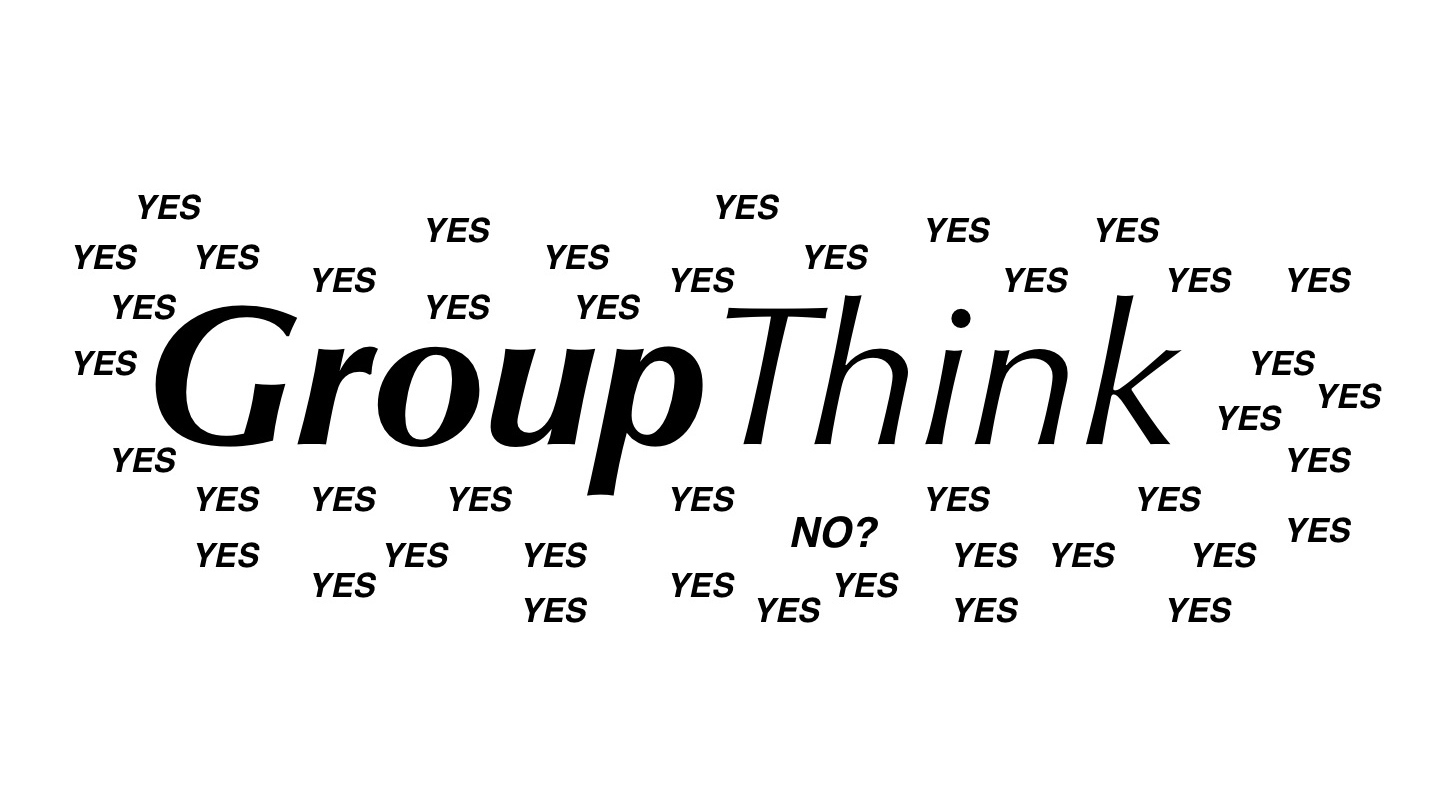
Jesus Follower or Christian GroupThink Follower?

Image

I so admire my weekly spiritual teacher (aka pastor).  He explicitly affirmed me identifying with the notion of being resistant to identifying myself as a Christian, especially to people who do not identify themselves as “Christians”.  -Inconceivable!  I dig it.

I can’t know what cognitive and somatic associations get conjured up for you when hearing the label “Christian” but I know what mine are, and it isn’t much of anything I want to be associated with regarding my spirituality and the way I want to live that out.

I consciously seek personal and in-depth contact with God, as I understand God.  My understanding of God is primarily interpreted and informed through the life of Jesus, shown in the new testament of the bible, not Christian groupthink.

My understanding of God is in active recovery from a complicitly abusive religious system which interprets me, God and others through a shame and intimidation based system, in the name of Christianity.

When I read certain bible verses, I often find myself needing to rephrase the statements, due to them being inappropriately applied and interpreted over me by a complicitly abusive religious system.  It’s a system that has used certain bible verses to accomplish changing my thoughts and behaviors through using shame and spiritual intimidation.

I am also at-risk for doing this not only to myself, but to others as well – no more denial.  That is why I want and need spiritual teachers who GET this, AND to be involved within a community of others who do as well.

When it comes to what I extract from bible verses, words are extremely important, and ameliorating Christian-jargon takes conscious effort, but I have found it to be very enlightening.

An example taken from “The Voice” version of Colossians 4:5-6

“Be wise when you engage with those outside of the faith community; make the most of every moment and every encounter.  When you speak the word, speak it gracefully (as if seasoned with salt), so you will know how to respond to everyone rightly.”

My personal interpretation (everyone has one) is this:

Be mindful when I engage with those who for whatever reason, do not associate within Christian circles, make the most of every moment and encounter you find yourself in.  I am not called to force these moments and encounters,  just to notice them.  When I use my words to talk, do it gracefully and season (not drench) it with salt.  Salt is what gives it flavor, which is my authentic-self and personality.  Grace doesn’t mean being pretentiously nice, because that tastes bad.  Seasoning with salt is being mindful that my call to authenticity is not a license to be insensitive and presumptuous towards others.  The combination of grace and salt, will position me to respond to everyone rightly, through transparency and humility.  Rightly doesn’t mean having the “one right” or “better” answer.  It is right, to admit that there are many answers I do not have for others.  It is right, when I have direct experience with the issue at hand, to share my experience of how I see my decision to follow Jesus shaping my circumstances and myself.  When I do not have direct experience or am largely unaware/ignorant of the issue someone is experiencing or sharing with me about, I can respond with sincerity and compassion saying, “I don’t really know.”  THAT is responding rightly.

Jesus Follower or Christian GroupThink Follower?  There is a difference.


Post Navigation