mindingmybiz

This blog is my shared process in working towards integrating self-awareness with all other aspects of life, while on my way to becoming more authentic and whole.

Archive for the tag “personal growth”

On Emotions

Emotions are part and parcel of being alive and human. They exist for the purpose of survival and flourishing.

Emotions are forces of energy which propel us to take particular actions that are supportive, protective, transformative, and creative.

Yet, just like other forces of nature or energy like heat – their power can range from being productive to destructive.

One of the first things to understand about emotions is that most of our understanding about emotions is flawed. More specifically – misguided, unhelpful, and even harmful.

Emotional literacy is not taught in our schools, nor is it valued. This leaves us far more ignorantly vulnerable and unprotected to the pathological, maladaptive, and misuse of emotions which are incredible sources of energy, power, healing, and innate wisdom.

Instead, we judge ourselves and others for having emotions even though they are a natural part of human evolution. We apply a lens that is restrictive and limiting to our emotions that is dualistic: “right or wrong”, “good or bad”. This makes it a lot harder to do what is evolutionarily intended: to feel them, and if they are intense – to feel and acknowledge them in the presence of supportive and understanding others.

So then – How do things go so awry when it comes to emotions?

Let’s start from the beginning, when humans start to develop. Infancy.

In order for infants to develop optimally – they naturally need and depend on an emotional bond with at least one caregiver that is characterized by a felt experience of: Belonging, reliability, comfort, being delightfully interested in, nurturing, and protection.

This kind of relationship in turn facilitates, understands, and values the preverbal communication of the infant – which is through expression of a range of different emotions.

The infant expresses feelings and needs: physical, social, and psychological. This forms the foundation for the child to develop their sense of who they are (self), in and through their relational experience of feeling enoughness: safe enough, good enough, on a consistently enough basis.

The necessary enoughness involves relational repairs when the inevitable human misattunements occur, which rupture the secure emotional bond from being experienced.

Relational repairs in childhood actually increases the tolerance level for inevitable misattunements and minor emotional injuries by loved ones. This is in a similar fashion to how the immune system develops – through micro exposures to a variety of foreign organisms it’s forced to adapt to, but I digress…

This kind of relational experience with at least one significant caregiver becomes internalized and cultivates how the child comes to see themself, even in a not yet consciously aware way.

This relationally developmental process profoundly influences the initial way the child sees themself and others in the years to come.

So, for better or worse: Young and vulnerable humans (infants) internalize how they are treated, responded to, and reflected back, by caregivers.

How are the inevitable mishaps, misattunements, and miscoordinated interactions by loving but imperfect caregivers handled?

It depends a lot on how the caregiver responds to feeling vulnerable and exposed as imperfect. This is where the difficult but important emotion of shame comes in. How do they respond to feedback that communicates: You’re missing me. You’re not getting it right with me – and it’s important to get it right – which activates some shame go alert for a course correct.

Will the caregiver rigidly defend against feeling shame and vulnerability to making mistakes? Or will they be open to owning that natural although uncomfortable part of being human and learn because shame is a marker that something important is occurring in this moment.

Can they respond to the invitation to reflectively course-correct with compassionate curiosity? This is the gift of within-tolerance-level shame. It alerts us to the inevitable need to course-correct when engaging in something that is important to us, like our relationships.

Course-corrections are a universal aspect of what it means to be human.

Humans are mistake-and-error-makers.

And –

Human are an incredibly teachable species, or we would not have been able to adapt and survive.

This learning or adaptiveness takes place when we are not so hardened to shame.

Self-compassion is an essential protector from intolerable shame which often in turn leads to being defended against or hardened to shame. That just robs us of the opportunity to make adaptive changes and course corrections on this journey called life.


That is my evolving introductory reflections from reading about attachment, affective neuroscience, developmental trauma, and on accelerated experiential dynamic psychotherapy (AEDP) which is a healing oriented approach to therapy.

In deep gratitude I continue to learn and have been profoundly influenced by studying the work of:

  • Diana Fosha
  • Hilary Jacobs Hendle
  • Peter Fonagy
  • Kristin Neff
  • Steven Hayes
  • Daniel Siegel
  • Ed Tronick

Adulthood Stranger Danger

There’s a label I keep hearing people throw on others, and that is simply this: “Weird”.

This “weird” is a pejorative, meaning: “not like me/us”. It could be anyone different, as if there is one set-standard of what’s considered “normal” and “acceptable”, which happens to confirm my biases!

In childhood, this may have helped keep kids safe from trusting all adults they didn’t know. In adulthood, the context for keeping ourselves safe is different because we are adults. We’ve got more capacity and maturity; emotionally, relationally, psychologically, financially, and physically.

What is “weird” or “strange” to us in adulthood could simply be what is unfamiliar or different. That’s it!

But how would we learn and grow if we approached everything that was unfamiliar or different as “dangerous”? Nobody would learn a new task or a new perspective or anything new at all! We would be pretty stunted people.

When it comes to meeting new people and encountering different perspectives as adults, “stranger danger” is a major barrier. If you want to learn and grow beyond what you already think and know, or think you know, then start to embrace differences.

Different does not equal danger.

Disagreement does not equal danger.

Different does not equal deviant, aberrant, unsafe, or threatening…unless of course, you’re firmly stuck in being very fragile, rigid, inflexible, and have Difference Intolerance Disorder. Admittedly we can all slip into that state of being, and – we can all move beyond it, too.

Difference Intolerance Disorder is not an actual diagnosis. I just made that up. But I’ve experienced this in myself and with others, and it stunts adult growth and development.

When you encounter people who have a different take on something than you do, this does not mean they are dangerous. It simply means they have a different perspective.

When you encounter people who disagree with you, or whom you disagree with on certain issues it does not have to equal threat. It simply means there is a disagreement – a different perspective.

People are different than you. People see things differently. This is normal. Not weird.

What is weird is this generalization of Difference-Intolerance-Disorder, in that people expect others to be just like them, or they feel a sense of danger or threat which activates an intense response of fight, flight, freeze, or fawn – as if THAT is normal.

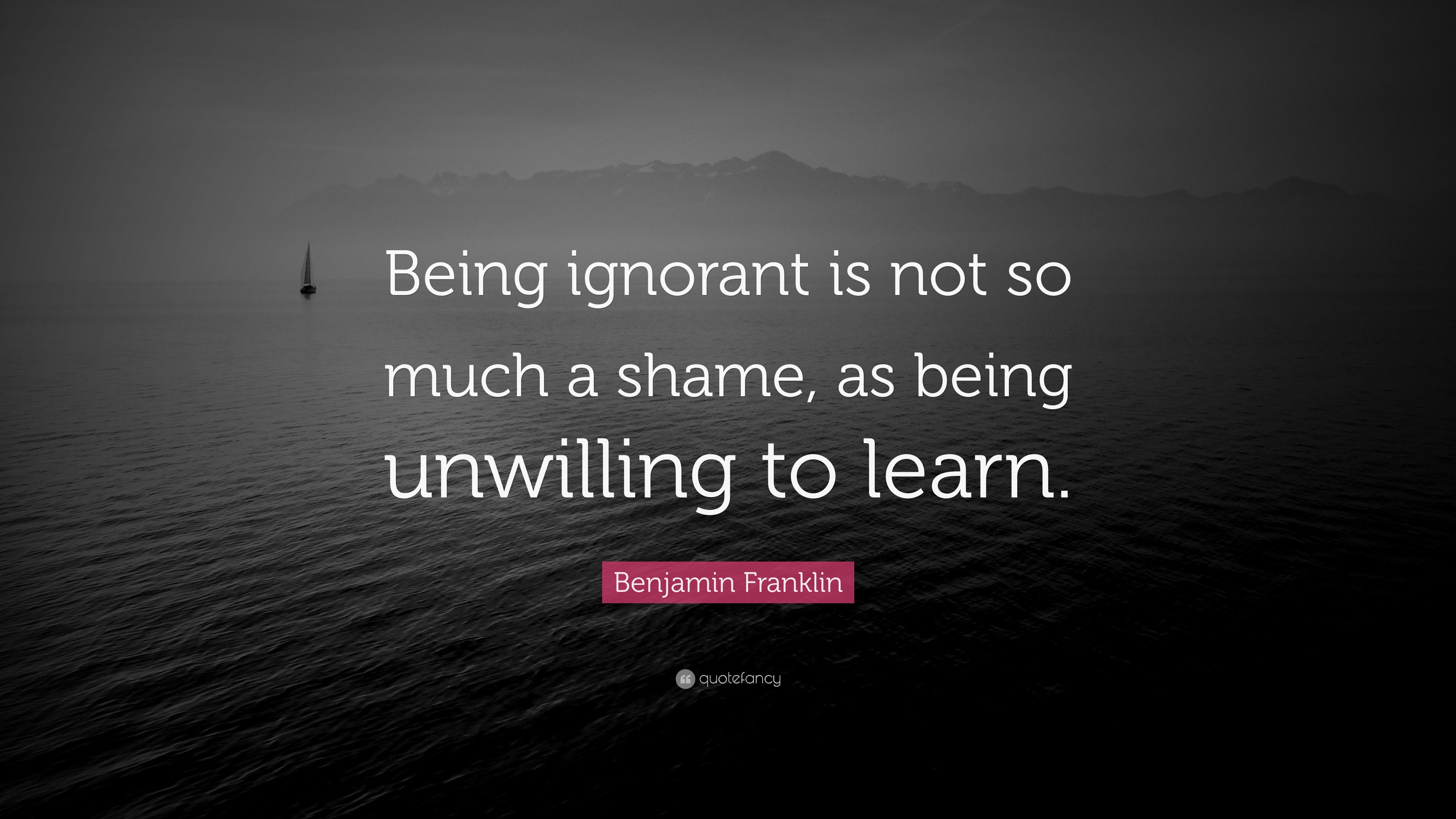
We have this ignorant-ignorance setting in where we are ignorant of our ignorance and are unwilling to learn. Instead, we quickly label anyone as different than us as “weird” in the pejorative.

May I suggest that we start seeing these differences and disagreements as opportunities to learn more about one another, ourselves, and grow out of ignorance?

Even if we didn’t change our conclusions, we could change how we understand others and how we relate to them. We won’t cling to needing others to be so like us, to feel OK.

Adulthood stranger danger is not cute, beneficial, psychologically or socially adaptive.

Difference Intolerance Disorder creates stunted adults and a not so good social ecology. Consider how biodiversity is embedded in nature.

There is an alternative way to be with those who are simply and normally, different. This involves humility, courage, and curiosity.

Imagine a world where people, just like the rest of nature, would expect (vs. suspect) and tolerate differences as if that was normal.

If you’re usually surrounded by or interacting with people who are pretty much just like you, consider all that you’re missing out on. And then get out there and grow.

Empirical Spirituality: Two Things

I ventured outside “the church” about 10 years ago. Prior to that, I spent almost 20 years of adulthood in the church.

Leaving the fold started with the ending of my marriage. In retrospect, it could have been said that through my divorce, my ex-husband got the church, and I got the world and the freedom to explore who I was, what I believed, and more importantly how I wanted to live my life and why (not just because the Bible or Jesus says so). This forced me to develop critical thinking and self-reflective skills which emphasized emotional intelligence from the inside-out. This was akin to an overdue internal reset, while raising young children.

Deconstructing my spiritual worldview, which was embedded in fear, gradually ensued.

A persistent fear of an omnipotent evil force ruling the world and my private thoughts was slowly investigated, along with a subtle but persistent fear of abandonment by a more loving but less powerful and erratically intervening God as punishment or mere consequence for not conforming my thinking, believing, and behaving to a set-standard.

Keep in mind – this has been about a 10-year journey, not a rapid and haphazard endeavor. As far as I can tell, this will be a lifelong journey, with different seasons and excursions throughout.

You see, the missing component in my spiritual worldview became apparent – a clear sense of what it meant to be me, according to me.

A slow and careful deconstruction involved my sense of self, which was also, guess what – feared as wholly untrustworthy. That belief had to be closely examined, with support of many trusted others.

The presumption that I was consensually conforming to this worldview from a place of being loved was something I could not grasp. It felt rigidly incoherent. I could not grasp this any longer, nor could I dismiss that I could not grasp it either. So, I tapped out.

Who was I? What did I believe in when it came to relating to the ineffable? How could I even embark on that when I couldn’t fully allow myself to express what was within, what I thought, felt, valued, and why? It all felt backwards. How could I relate to the transcendent when I didn’t know how to relate to the immanent? I often couldn’t clearly define what I felt, thought, and valued for myself. Why? Because I feared and/or disavowed all of that “fleshly” material for the transcendent. Again. Something felt amiss.

Looking back, the only thing I brought with me when I left the church was a curious, searching mindset out to answer something I couldn’t clearly articulate yet. What was I even searching for? I couldn’t have told you.

What I was searching for was a clearer sense of a self – both as a unique individual and as a non-unique human being. How could I truly love or be loved without a clearly sensed self, first? Love involves freely sharing something of the self.

Codependent (vacillating between being overly independent or overly dependent vs. interdependent), fear and shame-based conformity was all I knew. I conflated that with love and faith.

As I moved beyond the confines of the church, I took this one premise for deductive reasoning: God is love.

That’s it.

But what in the actual eff, is love? An apropos question following a divorce, don’t you think?

How do you define, characterize, and identify something that has felt so forsaken, foreign yet natural, innate yet elusive, for much of your life? Another premise was running in the back of my mind and that was this: Whatever I thought I knew about God and love was wrong. I need to start over. Burn the dead trees and see what comes up.

Reflecting on lived experiences, lots of therapy, lots of studying about attachment theory, different spiritual worldviews, along with some inductive reasoning formed by a developing reflective self or put simply: a self, an autonomous self, has helped point to something a lot less foggy.

I decided I needed to explore the world and myself, outside of the codependent relationship I had with religion, within the Evangelical Christian worldview.

As much as possible, I wanted to explore my own spirituality; empirically, autonomously, honestly, and authentically. When I say “spirituality”, I’m referring to how I relate to that which is immaterial and ineffable.

For the first time, I felt a newfound and yet terrifying sense of freedom to explore who I was outside of a belief system that defined my identity and values, the nature of reality, and God, for me. I was now able to discover and develop a more empirical spirituality and identity vs. a theoretical one, for myself.

It was like I was an eager student/scientist when it came to existential angst and humanistic questions that I was now free to ask, test, and not have to immediately settle with answers I had already been given.

This felt both liberating and terrifying. What if I got it all wrong? What if I can’t figure this out on my own? What if, what if, what if?

My divorce provided a sense of “evidence” that what I had believed, how I had perceived myself, God, reality, and life…was missing that foundational piece: A clearer sense of a me. Again – as a unique individual and as a non-unique human being.

Along with my own observations without the fear of hell and the devil overshadowing everything. This was truly the biggest test of faith or of trust in God I had ever taken: leaving the church. It felt like I was leaving “home”. Leaving “Kansas”.

Prayer (or self-talk) with open, honest, and emotionally raw relating did not cease. If anything, it increased. It reminds me of the Psalms of David. He had no “book of Psalms”. He didn’t know he was writing what would someday be used as a hymnal or considered sacred Scripture call “the Psalms”. He was just pouring out his naked heart and soul to God (or himself), uncensored.

This is what I did not leave behind when I left the church. God (which I also define as “Reality” or simply “what is”) cannot be boxed into a church, an idea, a belief, or a label. This is what I refer to as empirical spirituality. I used my ability to observe honestly; internally and externally.

Leaving the church actually helped me become more of an honest observer of life, of myself, and of the hardest age-old questions that still are unanswered. Like why is there so much unjust suffering in this world? A devil, spiritual warfare, and a loving and powerful God who is at war in unseen dimensions does not sufficiently answer that, even if it may be so. Nobody can conclusively prove or verify this, nor can anybody conclusively disconfirm and disprove it either, just like the existence of a Creator God or the non-existence of a Creator God. It is an unanswered question I’ve learned to live with, honestly. It will probably remain as such.

This is how living in faith feels to me; learning to be at peace with uncertainty.

I have read, listened to, worshipped with, visited, conversed with, and digested enough of a diverse plethora of perspectives on religion, theology, epistemology, religious and secular historicity, and psychology to say this:

At the end of the day, I don’t know what the actual facts are about so many things, in the least – what I’ve not borne witness to (like the resurrection or a man named Jesus). Yet, I can say this: only two things really matter.

But first, I have to say this from being such a devout “believer” prior to venturing outside of the church:

What specifically doesn’t matter most is what you (or I) say you (or I) believe in or don’t believe in, when it comes to religious faith, or spirituality, or epistemology.

You can label yourself a Christian, Atheist, Agnostic, Ex-Evangelical, Born-Again, Progressive, Spiritual-but-not-religious, Jew, New Ager, Hippie, Rationalist, Non-Dualist, Buddhist, or Muslim for all I care.

These labels mean very little.

What matters most is how you show up in life, especially in relationships. And this includes the relationship with your very own self, for that replicates in your relationships with others. For example, if you’ve got low tolerance for your own emotions, you’ll probably have a low tolerance for other people’s emotions.

So, what are the characteristics you embody while relating to others?

Simply put: How do you behave towards others?

How do you treat your family, partner, friends, exes, co-parents, ex-friends, co-workers, subordinates, bosses, neighbors, enemies, other people’s kids, people you’ve heard gossiped about, the have’s, the have-nots, acquaintances, people who are not like you, people you disagree with, or people you interact with online?

Of course, the way you relate to others varies immensely depending on context and many variables. There isn’t just one description, there’s complexity.

But in general, consider the people you interact with most – what characterizes how you show up? Or, do you avoid getting close to people?

How do you try to repair the inevitable mishaps in ongoing relationships?

How do you treat people who don’t interact with you regularly? Do you treat them better than those you interact with regularly? Or do you treat them a lot worse? WHY?

That is what matters most to me. It’s what I ask myself constantly.

How much do you care about how you treat people? Your label and beliefs mean very little compared to this.

Secondly: Are you growing?

How are you changing? One thing is constant and unchangeable in life: change itself. While change is inevitable, personal growth is not.

So, are you growing? And, how would you know? What is used to measure this change, merely your own opinion of yourself while you live a relatively isolated life? Ha! That’s a funny one! Especially if you have no record or documentation to track your inner life, your internal dialogue: your thought and emotional life. If you’ve not shared or expressed your inner life over a period of time to anyone, even yourself, i.e. a journal – how can you know any of this with confidence? Don’t fool yourself! Are you relying solely on memory? That is another thing that constantly changes. The story you tell yourself about the past. Your memory might be misleading you without you knowing it. Memory is very limited and bias, depending on mood and cognitive capacity, especially as you age in adulthood.

Don’t get me wrong, you’re definitely a major source of information, but you cannot be the only source with zero accountability or reference checks, so to speak. Who else would be able to answer this, in addition to yourself?

Consider thinking in terms of blocks of several months or years. How have your relationships changed? How has using your time and money changed? How has your perspectives changed?

Are you growing? And how do you know?

Is the only thing that is changing in life, the calendar and the ticking clock?

For me, to answer these questions with more clarity, I had to step outside of the church or a systematic worldview that I conformed to without a clear sense of self. I felt the pull to develop a spirituality that was more empirical. More authentic. More real and meaningful to me. This involved taking detailed notes, journaling in-depth, recording vulnerable discussions within myself/to God, and at times this involved sharing these with another trusted person.

I’ve found that for me, God represents a focus on reality and relationships, including the relationship with oneself, and fosters growth in how I connect with myself and others. In essence, God is reality: that which is or simply exists, empirically rather than theoretically.

The labels, beliefs, canonized books, and whatever interpretations come from ancient, canonized literature all matter little in comparison to those two things. At least, for me.

And one thing is perhaps the icing on the cake: Spiritual community. Authentic spiritual community. Where can I turn to for this? I think I can now turn back to the church. Perhaps, I am more ready to integrate community because I can find enough solidarity within any community as long as those two things have plenty of sunlight, soil, and water for there to be deep growth with others despite differences in mere labels.

Relationships and growth. They go hand in hand, together.

Let’s see what this will bring forth. I am looking forward to this next chapter and in contributing in a meaningful and authentic way. And community that can help foster those two things (which go hand in hand) is good enough for me!

At the end of the day, I will grow…come what may.

Enneagram and Non Duality (Advaita) Musings

The Enneagram is a useful tool which can assist in doing the “highest activity the separate-self can engage in”.

The Enneagram assists by organizing complex and seemingly random human experiences and behaviors into basic patterns or basic flow.  The Enneagram does this by reducing human experiences i.e. behaviors, thoughts, feelings, sensations, and perceptions down to their most basic common denominators:  Basic desires and fears, and key motivations.  A solid Enneagram study can reveal what consistently drives thoughts and feelings which lead to behaviors and choices, in a coherent manner.  

Infinite Consciousness (aka. God) becomes or incarnates as a finite human body-mind to experience the marriage of divinity and matter.  Aka a human being.  What humans often do irrespective of race, class, gender or any other demographic distinction however, is forget who they truly are and misidentify as only the finite body-mind.  The experience of waking up to what’s beyond the finite mind-body within, and integrating this essential truth into all of life is what maturity is about, to me.  The process of growing into or integrating the infinite with the finite and recognizing they are not two separate entities, but One – is a journey I believe is unique to humans. 

Think of two people running in a 3-legged-race. They need to learn how to harmonize their steps and coordinate as one, or they will not get far, fast. Their journey will be frustrated with incoordination and an inefficient use of energy and rhythm. This is where the Enneagram becomes exceedingly useful, when you understand its potential along with accurately typing yourself, it accelerates unf**king yourself. It helps coordinate the infinite and finite movements in feeling more graceful and efficient versus effortful and strident in your energy flow or movements. This manifestation is experienced first inwardly, then will inevitably manifest outwardly. This is a lifelong unfoldment of integration – to experience more alignment and ease in being while experiencing the full spectrum of human-ing.

We are all God or Infinite Consciousness, incarnate. The vehicle or conduit of infinite consciousness is the finite mind-body. The ego state is when the finite mind-body mistakes its very own activity or role as a separate identity or self or entity. It wrongly believes it is separate from Infinite Consciousness or God and must therefore gain or avoid something, in order to be whole.

How does a separate-self go about doing this? The Enneagram distills this down to 9 basic patterns or constructs, each with 9 levels of development.

The finite mind-body has its place and role. As it grows in recognition and remembrance of its inherent and essential incarnate nature aka Essence, and integrates or is overarched by this recognition, wholeness will increasingly manifest and unveil itself.

Suffering occurs when the inverse order takes places. In other words, when the separate-self superimposes itself above all else, and conflates role and activity (thoughts, feelings, sensations) with its essential nature or identity. Another way I’ve said this is making the footnotes, the Title or Header.

Accept the invitation by the Enneagram to “know thyself”, well, including but beyond the ego. It is indeed as Rupert Spira says, “the highest activity the separate self can engage in”.

On Morality & Love

There’s a story of a man named Simeon in the Bible (see Luke 2:25-35) who was described as being “righteous and devout”.

What does it mean exactly, to be righteous and devout? I’ve got my personal stereotypes and caricatures that portray someone who is “holy”, meaning a bit emotionally cold or stoic, conditionally approachable, not very down-to-earth or relatable, probably intelligent, sophisticated, and rather arrogant. That’s the best description of the image I find that initially emerges into conscious awareness.

Well according to how Jesus answered a teacher of the law, the highest form of morality can be boiled down to love (see Mark 12:29-31). Sequentially and specifically; loving God with your whole inner and integrated being. And then Jesus adds an addendum that seems inseparable to the first command (and that’s much easier to measure) – ‘Love your neighbor as yourself.’

So, I think it’s safe to presume that being righteous and devout means loving an external, metaphysical, ethereal, abstract Being with YOUR whole internal, metaphysical, ethereal, abstract being – measured by an empirically validated and evidenced way – how you treat “your neighbor” as well as yourself.

It’s so simple that we don’t buy it and we often find ourselves adding on a multitude of “morality measurements” with countless other morality clauses than what Jesus added. Just love your neighbors as yourself, that’s hard enough. And your “neighbor” is something else to contemplate in the story of the Good Samaritan in Luke 10, which I won’t go into in this post.

So, the question I’m pondering here is this: How is mental health and development, factored into this command – to love so integratively in a way that it manifests with congruency with other people?

By all appearances and experiences of mine thus far I’m quite sure of this: being loving is not an inborn human trait. Being loving isn’t innately and independently present in human infants. I’ve given birth to and am raising 3 human souls, and I’ve watched them closely.

Now to be clear— being IN NEED of love, at birth and onward is inborn and innate. And when you form a secure attachment and nurture and protect your babies they coo, smile, and affectionately bond with you right back. It’s a beautiful circle of love. But it didn’t begin with the baby first loving me. It started with a baby who needed to be loved and cared for, FIRST.

The nature of the intimate dyad of human caregiving determines (although not exclusively) a great deal in how “loving” a person will eventually be, influenced by how much they themselves felt loved, or more specifically – securely attached.

“Loving” is not to be confused with merely how “nice”, “polite”, socially acceptable, or virtuous they appear in public. This is about way more than mere etiquette. Rather, it’s far more about how much they’ll be able to enjoy consensual and reciprocal vulnerability, authenticity, and work through the inevitable interpersonal conflicts with a selected few. In other words: healthy interpersonal relationships.

In an ideal world, humans would produce loving human beings – generation after generation. It doesn’t take much to see that we don’t live in an ideal world. Far from it.

So if children grow without enough of this kind of emotional secure attachment created within their earliest and formative interpersonal relationships, how can we expect them to give what they don’t have? For so many who didn’t, are we screwed? No. There is a path of healing and inner recovery. God is sensitively attuned to the broken-hearted, who hunger and thirst for righteousness. Just meditate on the Beatitudes in Matthew 5.

I believe humans are biologically wired to be moral creatures. When we are immoral, we suffer and often find ways to escape or find relief from suffering. To be clear again: We are innately moral creatures which means our biology is wired for thriving when we’re morally strong. And I hope I’ve made it clear enough by now that when I say “moral” I mean we’re biologically created to be loved and loving – this is how we’re morally biologically wired – for love, aka to need to give and receive secure emotional attachments. Possessing a familiarity of attachment styles in both childhood and adulthood is helpful to understanding where I’m coming from. Hopefully if you’re making a living within the mental health field or personal development arena, you’re more than a little familiar with the scientific literature on attachment styles and neurobiology. Hopefully.

I digress. Getting back to morality and love…

“We love because he first loved us.” 1 John 4:19

So, to those who perceive themselves as morally righteous, and therefore loving as described above – What is your detailed and coherent, autobiographical narrative that’s made sense of your adulthood in light of your childhood?

In all transparency, this is somewhat of a trick question. I’ve heard people saying they grew up with love and support from their parents, yet these same people are often times some of the quickest to criticize or judge others and are also some of the most emotionally cold or shallow people I know. To be sure, they are often very “nice”, “polite”, socially acceptable, and fluent in practicing social graces/etiquette. Yet, there seems to be a gaping hole, a sense of wtf-ness that’s hard to explain and even harder to convince them of.

Now of course, I could very well be totally off myself here. But the disjointed feeling I get in this wtf-ness experience is because I hear they consider themselves as lucky for growing up the way they did, and therefore they don’t “morally” struggle much. Yet at the same time, I observe that they find it very difficult, unvaluable, and unnecessary (if they even notice) to be emotionally vulnerable, authentic, and show capacity to work through interpersonal conflicts with their loved ones. It’s a head-scratcher for me.

This is the best I can come up with to try and explain the dissonance between morality and love, profoundly the kind of love from God, that pours out interpersonally. Unless you experience it yourself with God, it’s hard to explain to others.

There was a woman who was described in Luke 7:37 as “a woman in that town who lived a sinful life”. She wept on Jesus’ feet (portrays her as probably crawling on the floor in approaching and being next to Jesus) kissed his feet, then wiped his feet with her hair, and poured perfume from an alabaster jar.

To be loved and to love.

I think she gets it.

Intuitively.

Without explanation.

Her story might help shed light on this gaping hole for those who need an explanation. Jesus saw that Simon the Pharisee didn’t get it either.

“Then he turned toward the woman and said to Simon, “Do you see this woman? I came into your house. You did not give me any water for my feet, but she wet my feet with her tears and wiped them with her hair. You did not give me a kiss, but this woman, from the time I entered, has not stopped kissing my feet. You did not put oil on my head, but she has poured perfume on my feet. Therefore, I tell you, her many sins have been forgiven – as her great love has shown. But whoever has been forgiven little loves little.”

Luke 7:44-47

How well you understand the love of God for yourself has much to do with how much you’ve experienced forgiveness from God. And if in your own self-estimation, you don’t have much to be forgiven for, you’ll find it hard to love others who do.

It boils down to compassion. If you don’t have much need for compassion from others, you won’t feel much compassion for others either.

If you’ve never felt much need for love from others, you likely won’t feel much love for others.

All Emotions Welcome

All emotions are welcome to eat, at the table of consciousness.  I affirm the valuable energy and wisdom, equally inherent in all emotions.

I uphold a non discrimination policy regarding emotions.  I also acknowledge that our western culture privileges certain emotions being tolerated, expressed, and openly shared, while other emotions remain underprivileged and discriminated against in the guise of being “virtuous”, “spiritual” and/or “strong” and “having it together”.

A multi-emotional diversity culture is a culture in which we co-create, with the intention of becoming more intimate and consciously aware of our inconspicuously held conditioning which reinforces emotional bias, ignorance and spiritual bypassing.  And then, update and expand this space to fully inhabit YOU.

This conditioning may often privilege comfortable emotions, while implicitly or explicitly, discriminates and devalues emotions that aren’t considered as “acceptable” or “appropriate” because they cause discomfort (to others or yourself), namely unnamed shame.

I’ll call this kind of emotional discrimination: “Emotionalism”

Many of us have internalized emotionalism. It is a form of Self-denial and emotional dishonesty, but can often mistakenly be considered “spiritual” or “conscious evolution” in certain circles.

Perhaps it is.

Perhaps it isn’t.

We can delve into this if you’ve got a subtle but undeniable inkling that there’s more to it. More to you. And, you’re ready to go deeper inside.

Contact me if you feel a curiosity with your emotions, yet can relate to internalized emotionalism. I have personal, lived-experience in recovering and healing from this all too common intrapersonal dynamic. The freedom and deeper level of trust and respect from within, is so worth it. This is a labor of love through Emotional Empowerment Coaching, where we value all your emotions, and can utilize the energy contained within emotions in a life-giving way that does no harm to others, or self.

Because, all emotions are welcome.

Let’s Take a Journey Within!

Often we take up a kind of space inside without conscious awareness of what that space holds, or doesn’t hold for us.

Often, we need a present, presence of another to ask, inquire, pause and reflect with a curious, humble, and genuinely interested person who is focused on making the space to illuminate and bring forward what’s going on inside without knowing what will be found.

The deeper vulnerable aspects of us are often not readily accessible with just any kind of space.  There’s a shyness that marks this kind of space, a hiding, and yet a longing to come out of hiding.  What can call forth this coming out of hiding?

Deep and abiding presence without pretense or a hidden agenda to “fix” you, but rather to know and see you, and deeply respect all that shows up.

I believe this kind of space is healing, transformational, illuminating, and deeply spiritual.  This kind of seeing and witnessing inside ourselves, while another witnesses and holds this kind of space is profoundly divine and yet, based in human to human connection.

This kind of showing up isn’t for the faint at heart.  It takes incredible courage because this is risk-taking in the most profoundly vulnerable level – being fully seen.  This act is one of honor and courage.

We’ve learned many defensive mechanisms to avoid this at all costs, yet we also crave this kind of nurturing presence like a baby craves being safely and warmly held.  It’s innate.  It is also something I’ve found that is contagious.  When you’ve experienced being in this kind of space, you will start to pass this kind of space-making onto first yourself, then to others.  It’s contagious in an empowering and soul-freeing way.

Learning to tune into our emotions on the way to taking up residence in this space is an act of defiance against our self-sabotaging fears, as well as an act of taking back core energies that we need in order to thrive.  This often requires us to do some work in practicing feeling some intense discomfort and knowing that these discomforts come and go, and strengthen us with each passing wave.

Often we need the present, presence of another while we expand our level of conscious awareness while the ego or old survival patterns pull out all of their stops to keep us inside an outdated comfort zone.

My coaching style involves a combination of inquiry, curiosity, gentleness, and authenticity.  This isn’t about perfection or propriety, rather this intentional presence gives you permission to show up authentically with me.  My commitment is to bring in the full presence of my intuition, curiosity, and honoring the trust-seeking to usher in this kind of space where you will also practice ushering in this kind of space for yourself and others.  It’s a practice for yourself that’s so incredibly worthwhile, just like you.  I’d be honored to join you on this part of your journey.

I’m a certified Emotional Empowerment coach and I’m now taking clients!  If this style of coaching and presence is something that calls to you, contact me for more info on emotional empowerment coaching sessions with affordable packages and pricing!

The Drama of Wisdom

Intruder
Sound the alarm
An uncomfortable thought broke in
Another unpleasant memory with an unpleasant feeling

Back off, you invader
Leave me alone
I will resist you
I will cut you off
You’re an unwelcome

No.

Excuse me?

I said “No”

Who is this “I”?

I am the “I”
You are also the “I”
You’ve forgotten who you are
Just because it hurts doesn’t mean you’re going to die

I can be trusted with your thoughts, memories, and feelings

Yes, push back
Push back the smothering walls in this suffocating house
You can contain more – not less
Make room for what arises

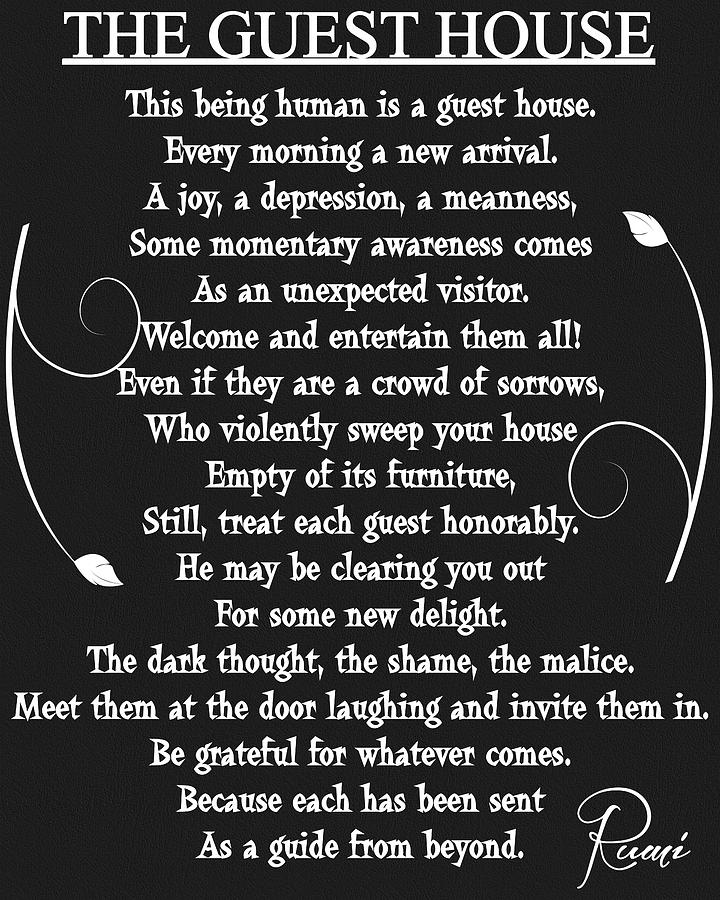
These are not enemies
These are honored guests
Unpleasant at first yet the more you resist, the more they persist

They come from within, not from afar
Where else will they go?
They belong to you

You kick them out
And they’ll return

This isn’t a threat
It’s dharma
, it’s reality

Treat them as allies, not as foes

The choices is yours
This house is laid brick by brick
This life is made, choice by choice
This one life is yours
All yours

Seedling of Power – Enneagram Type 6

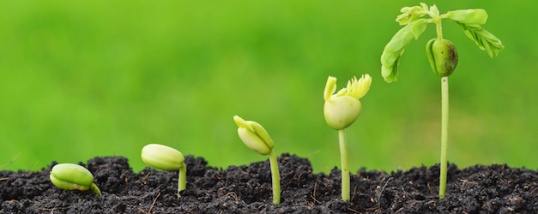
There’s a seedling of power within me.  It’s sprouting.

I’m waking up to the subconscious belief I’ve been loyal to for so long as though this was a survival-dependent strategy:

“It’s safer to be weak and unsure, doubtful, and shielded from my inner power.”

The deeply entrenched belief that claims the best source of validation is external, the most reliable feedback is the feedback from others that accentuate my imperfections, that any feedback will do as long as it will protect me from encountering my inner authority and power. Because that is a dangerous place.

For various reason, I somehow internalized early experiences in my formative years which developed into an anxious either covertly or overtly, dependent personality. This personality which is perceptively explained by Enneagram Type 6, is driven by a belief that it’s safer to project my power or any other “threatening” aspects of myself, onto others.

In certain contexts, this strategy had another layer: a callous. I didn’t want people to see how I struggle to fear my own power and even hid this from myself, unwittingly. Some people exploit vulnerability instead of provide protection and guidance, depending on their own internal structures. Sometimes I can’t tell if others will be a “protector” or a “perpetrator”. So when in ambivalence, the best defense is a good offense. This counter move against vulnerability and the fear of being exploited has sometimes made me feel “powerful” or at least, protected. It’s armor. But this armor is not the kind of power that’s sprouting within me.

The kind of power that’s sprouting within is a sense of inner awakeness to my inner world. It’s a very subtle form of awareness sprouting from my internal validation that doesn’t first depend on external validation. This sense of inner trust to what I’m awake to within, is often paradoxical yet hidden in plain sight. It connects me to inner wisdom that trusts myself enough to take risks, and learn valuable lessons from mistakes and regrets. That external validation is important and yet not primary, but supplemental to my own validation. If I don’t get it when I’m looking for it from another, I’m OK. No need to panic or get pissed off and go to combat to get it from a specific source. Nor do I need to shape-shift and contort myself to receive validation that will always miss the mark if I’m shape-shifting in order to receive it.

This conscious awakeness can rest in the faith that there’s plenty of space for seemingly polarizing “truths” to coexist, in harmony. So when I don’t receive external validation, there is no need to worry. That’s where faith fills the void, that there’s enough space for a variety of perceptions, including mine. This kind of faith requires a boldness because it may go against the current of polarization. Yet if this faith isn’t boldly embraced a fallout can occur within me, a split which can be expressed in my relationship with others, and with my worldview because that faith is the bridge. It can be that significant and also play out on a collective macro level, for better or worse.

Who can hold this kind of space where it’s safe to coexist between opposites? An Ennea-type 6 who is awake and has reconciled with their own inner power and authority. This takes tremendous courage and inner reconciliation. Breaking out of that cage of “smallness” requires inner “bigness” which goes against the flow of “safety in smallness”.

I fear my power. I fear my confidence. What if it’s wrong? What if I mess up? What if I get hurt? What if I hurt others? Power can do all sorts of unpredictable things that hurt people.

And

so can abandoned power.

Owned power has the potential to also help set people free from their chains of “what if’s” that focus exclusively on catastrophic endings.”

What if…

you were to own your inner power and live alive and awake in it?

Self-Reflections on Real vs. Fake Confidence, In Relationships

I like who I am.  I genuinely do.  Yes, there are parts of me I feel more comfortable with than others, but they all make up who I am.  They all belong to me.  The sum of all my parts make up who I am; deep, passionate, caring, and completely lovable. Not everyone will see me in this way, at least not all the time. I don’t either, and I’m OK with that. 

Others have parts of themselves they’re uncomfortable with too, and when certain parts or emotions are expressed in me, it may provoke a reaction from others which illuminates how they feel or interact with their own similar parts.  It’s very rarely personal, but almost always revealing of how one holds certain parts of themselves, usually unconsciously.  That’s exactly why it isn’t personal, yet to the degree an individual can make space for all their parts it will impact the degree of intimacy or intimate-capacity they have for another.

In conflict, pivotal opportunity arises.  The opportunity to strengthen a connection by showing up with openness.  When the struggle (and it’s often a struggle, hence the conflict) to do this is self-acknowledged, compassionate curiosity can soften the edges.  

As a type 6 on the Enneagram, I can detect extremely subtle emotional energy, for better or for worse.  You see, emotions tell on us. They reveal what we tell ourselves about ourselves, and what we tell ourselves about others, all at lightning speed. Curiosity engages with this process and slows it down, because it all happens so rapidly. Slowing the speed down serves to prevent defensively disengaging and shutting down the process, or reacting to it by going on the offense against whatever or whomever we feel defensive towards. What often happens when we don’t consciously slow down to reflect, is a missed opportunity at best, and a self-sabotaging repeat of things we’ve later come to regret.

When an individual shows up with a non-defensive presence and can attune, or meet me where I’m at with sincere, non-judgmental engagement i.e. empathy – it is extremely subtle but profound. This is how intimacy is built, and it is also where it is lost if someone cannot engage with this process. The capacity to be intimate and emotionally available with themselves, and therefore with others is what’s illuminated in these moments. And with that, the opportunity to grow. And, there is always room to grow individually and relationally.

When the opportunity is seized, it’s truly a gift.  A gift that’s birthed in imperfection. It’s a privilege to witness this. What I’m witnessing is another sacred human’s strength and profound trust in themselves, and the impact of being trusted by them as well. There’s risk involved. I want to show up as honestly and authentically as I can, there’s little room for perfectionism in this process.

The natural slower rhythms of synchronicity within this level of intimacy spring from doing enough of this on an individual level first. When two individuals mutually cultivate this kind of space between each other there’s a shared protectiveness and enjoyment, and it’s quite nice and quite rare! So, treasure it.

And while enduring the experiences where there’s a lack of synchronicity, I’m learning to not take the misattunements personally.  It’s more than likely a ripple effect of the rapid past-time insecurities, anxieties, and defenses at play. The key word is: rapid. It cannot be overemphasized how important slowing down is, in order to engage in this process productively.

In certain cases you may find yourself in isolation when it comes to having the intention to evolve, and strengthen your own self and the relationship. When another individual (of which you have no control over) is more invested in their ego boosting their self-esteem, they will defend and resist with great effort. It’s hard to believe because it feels so personal, and it is, but it’s not about YOUR personhood, it’s about theirs. Their very own sense of self-esteem is dependent on a false self (ego) to feel secure, and there is rigidity, not flexibility, in the ego. It’s ego-preservation vs. self-preservation.

When the True self is the one fueling self-esteem, there’s an openness that emerges because the True Self, knows itself and all of its parts (the good the bad and the ugly) can belong so clearly to itself regardless of how anyone may react. It’s an integrated Self that is self-accepting.

So when you experience resistance, understand this is where you can also grow. And to be clear, resistance and defensive reactions can range anywhere from avoidance to fleeing to going on the offense by becoming either passive-aggressive or blatantly aggressive. This is indicative of ego-preservation, that results from having a fragile source of self-esteem (the ego).

When (not if, but when) this happens, you’ll have an opportunity with yourself to get very clarifying information around your own ego-preservation activities, which we all have to different degrees, and of different levels of awareness and intensity depending on how your personality operates (read up on Enneagram). The cracks in your own armor around this may likely get exposed.  Ouch. And welcome to the human race, once again. How you respond has impact. Invite yourself to become empowered.

Some of us are more easily duped by our egos than others. To those who have very sophisticated egos when it comes to self-awareness and where we are on our growth maps, you may want to ask yourself some discerning questions:

  • Do you value or dismiss what’s triggering you? 
  • Do you engage in vulnerable and compassionate self-reflection, sharing this with at least one individual who will challenge and vet your narrative?

If not, you’ll stay stuck and your evolution will pass this opportunity by, and will return again and again until you’ve worked this through to completion.  And, may then visit your descendents for the opportunity to evolve in the next generation.

Little by little, (which is the pace that organic life grows) you’ll stretch your window of tolerating discomfort as you receive these Divinely inspired opportunities to say yes to building a sense of genuine self-confidence that stems from grace and truth.

This is how ultimately how I see adult development works, whether I like parts of it or not. 

Post Navigation